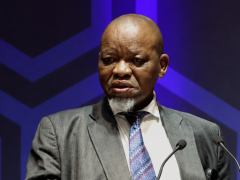
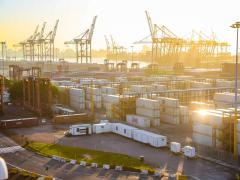
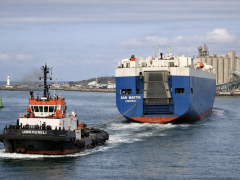
There’s a different narrative emerging in the development model in Africa. It’s no longer just about digging up dirt and shifting it to a port. The bigger story is about what these developments are unlocking in terms of investment in support industries, infrastructure, logistics capacity and more efficient border posts. “Ten years ago, in most of the rest of continent, there were a few inefficient, tired cement plants in each country. By contrast, in the past 5-6 years we have seen massive investment in basic building materials like cement plants, gypsum plants and downstream iron and steel manufacturing,” says Duncan Bonnett of specialist consultancy Whitehouse and Associates. “This has translated into supply of materials at a lower cost which means people are able to build with more confidence. As a result in the Copperbelt there are now huge plans to redevelop areas as service hubs for the region – and the same is true of the DRC,” he told FTW. But this all needs efficient infrastructure, which is an issue that authorities are addressing. When Bonnett visited a year ago, the 200km journey from Kolwezi to Lubumbashi took a whole day. Work on the road is now almost complete – and the same journey will take just three hours. These infrastructure upgrades underpin the economic growth in the region, which Bonnett says is likely to be exponential. “We’re not looking at 4-5% but rather annual growth of 10-20% in several areas. “In northern Mozambique and southern Tanzania there are massive gas projects starting to unfold, with the first gas project on the Mozambican side expected to attract up to $20bn in investment. “They will be building new towns and industrial areas in virgin parts of Mozambique, with a similar scenario unfolding on the Tanzanian side of the border.” In a few years’ time this could be one of the five or six largest natural gas-producing areas in the world, according to Bonnett. Even in Tete Province in Mozambique, which is currently slowing slightly due to a slowdown in projects and political uncertainty, growth remains buoyant, he said. The Copperbelt – on the Zambian and Congolese side as well as the new Copperbelt in North West province – is also seen as a significant growth node. “A lot of growth is coming out of the fact that project developments are in fairly isolated areas and to unlock that development you need to develop roads, rail and power as a first stage. And following that industrial parks, airports, ports and accommodation for workers. So you’re seeing housing and towns and townships being developed for 10 000-15 000 families at a time.” And because stranded resources are generally very large, they can justify this kind of investment. “We see it in Tete with the Brazilian Vale Group building a 1000-km rail line plus port – and because it’s a longterm development, they can justify it.” The same applies to other mining interests in Mozambique where some of the road and rail projects will open up new trade and development routes and potentially new ports as well. In addition, rail links and improved road links are once again being punted in the Copperbelt to link stranded resources either to Angola or the east coast of Africa. Interestingly, there is little appetite in other countries to strengthen logistics links with South Africa. On a broader level, Bonnett believes that Nigeria offers major growth opportunities from a manufacturing and consumer perspective. Ghana – which has oil and gas – has not been as successful as anticipated but has seen enormous development in the past 4-5 years in terms of commercial and retail property, housing and infrastructure development. New markets are unfolding in the likes of Uganda with oil and Ethiopia and Kenya, both of which have potentially large oil and gas finds. These two countries are also large economies and emerging as key new hubs of development in their own right, he added. “We will see much more integration of infrastructure in those regions – which have the ability to pay for that infrastructure through a combination of state, donor and project promoter resources. They also have the rationale that would support that infrastructure in terms of transport of commodities.” While the first “scramble for Africa” was largely done without the participation of South Africa, local businesses are now doing a little better than four to five years ago, according to Bonnett. “Over the past few years there have been a few brave souls who dived into the rest of the region and reaped the benefits. But South African companies are now seeing that the domestic economy is not taking off, despite promises of huge infrastructure spend. “More and more are therefore realising that they need to factor the rest of the continent into their long-term development plans. It’s not good enough to fly in and fly out and cherry-pick the odd project to prop up the balance sheet. They have to start engaging and taking a targeted longer-term view of the continent.” Currently companies based in South Africa are getting a reasonable share of the project action, says Bonnett, but with countries that are either contiguous to South Africa or with which we have had a traditional relationship like Tanzania, Ghana and Nigeria. They’re now realising that they can make good money in the rest of the region. They just need to do their homework, understand the market, take a longer-term view and put their hands in their pockets and pay their school fees. “Hopefully we will soon start to see a lot more South African companies with a physical presence in the region.” INSERT & CAPTION A lot of growth is coming out of the fact that project developments are in fairly isolated areas and to unlock that development you need to develop roads, rail and power as a first stage. – Duncan Bonnett INSERT $20bn Investment that a gas project in Mozambique is expected to attract.
Economic growth unlocks investment funds
Comments | 0
© Now Media. This content is protected by copyright and may not be adapted or republished. If you would like to discuss cooperation opportunities, please contact: editor@freightnews.co.za.