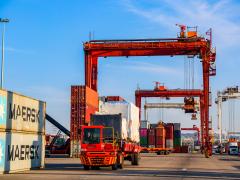
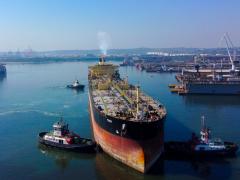
The lack of capacity at the Port of Durban has led to a significant reduction in the transhipment of containers through the port, heavily affecting the feeder business in southern Africa. So much so that Ocean Africa Container Lines (OACL) in November suspended its two-vessel feeder service between Durban and Mozambique as it was just no longer economically viable. According to Andrew Thomas, CEO of OACL, which operates a fleet of modern, purpose-built container ships catering to regional, feeder and domestic cargoes, the lack of capacity in Durban has significantly reduced the feeder business. “It has been very challenging, as shipping lines have actively been looking for alternative hub ports instead of using Durban. The result is that discretionary cargo is moving away from southern Africa and transhipment cargo intended to serve the region has found alternative hubs.” He said while there was much enthusiasm and hope some 18 months ago when Transnet launched its Quantum Leap programme that was intended to increase productivity by 30%, not much has resulted. “Of course Transnet has been looking at development plans to increase capacity in Durban, but so far the process has not been very successful and we have not seen any increase in capacity. So while the market has continued to grow after the decline we saw in 2009, we have not benefited due to Durban’s congestion issues.” The result, he said, was that the shipping lines had not only found alternatives, but were actively looking for ways to move containers away from Durban until the port could develop sufficient capacity. For Thomas it is not just about developing capacity but also about ensuring efficiency. “There are two components to a successful port and the first is the pricing. It has to be pricecompetitive as part of a network that provides effective waterside and landside connectivity to its markets.” The second, he said, and highly related to the first component, is that it needs to be efficient. “Hub ports that can consistently provide berthing on arrival and efficient service alongside will be more successful. Durban, no doubt, has the ability to do this and has great natural advantages to help it along – like its location – but it must have the capacity within the port and its landside network to allow cargo to move through it efficiently at a competitive rate.” Thomas said due to shipping lines moving their transhipment business away from Durban it has resulted in OACL having to be innovative in protecting its commercial business by utilising alternative facilities and routes.
Durban inefficiency pushes transhipment cargo to other hub ports
Comments | 0
© Now Media. This content is protected by copyright and may not be adapted or republished. If you would like to discuss cooperation opportunities, please contact: editor@freightnews.co.za.