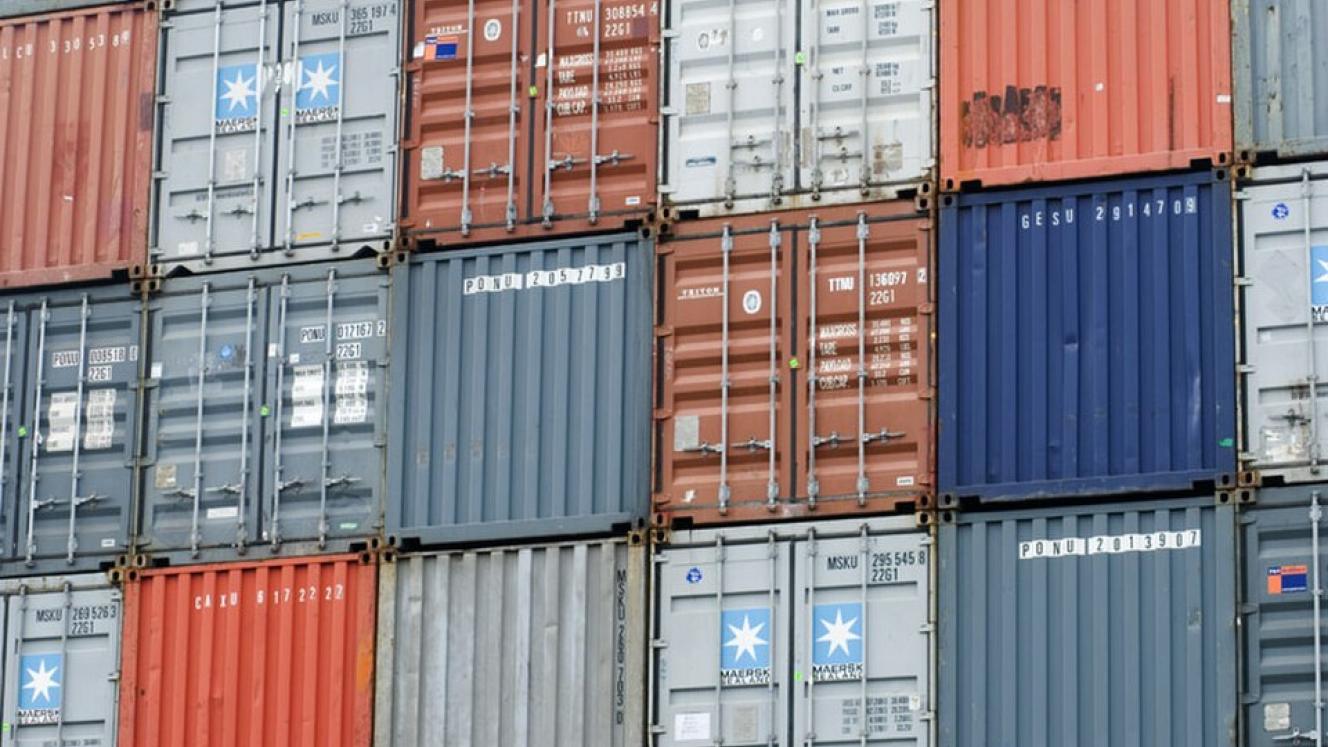
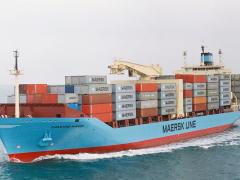
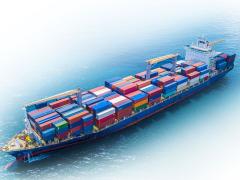
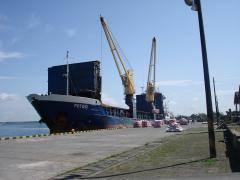
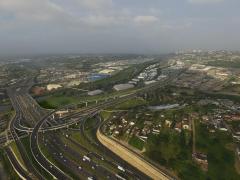
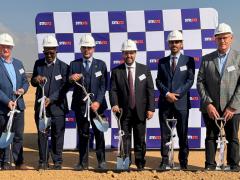
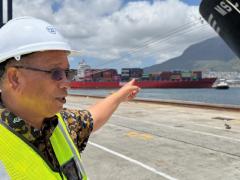
The Port of Durban now has the largest container terminal and is the busiest container port in the southern hemisphere, according to the American Association of Port Authorities (AAPA) world port rankings. It beats the previous number one, Melbourne, into second place by a mere 120 000 TEUs in 2011/12. The major focus right now is on increasing container handling capacity at the Durban container terminal (DCT) Pier 2 and the adjacent Pier 1 container terminal. Current projects to increase capacity in the short-term are the Pier 1 Phase 2 extension which involves the conversion of a portion of Salisbury Island to provide an additional 1.4m TEUs, and the continued re-engineering of DCT to provide a further 0.6m TEUs – taking Durban’s container handling capacity to about 5m TEUs. In addition a number of containers are now handled at multi-purpose terminals in the Point and at Maydon Wharf. Equipment upgrades and acquisition of new equipment are also playing a key role in the recovery plan for the DCT. Some R6 billion of the R7.4bn allocated to the Port of Durban over the next seven years will go to Pier 2, Hector Danisa, DCT terminal executive, told FTW. The bulk of the money has been allocated to the major programme at the North Pier, a project that lasts until December 2017 – and included the installation of the crane rails for the new tandem-lift cranes, scour protection and berth deepening. The seven new ship-to-shore (STS) tandem-lift cranes, costing a total of R700 million, are a crucial part of the development programme at DCT. “The capabilities of these cranes will see a massive jump in productivity, with gross crane moves per hour (GCH) – a key measure of terminal efficiency and how well equipment is used – jumping from the current 26 to 33 GCH over the next three years, a 27% improvement,” said minister of public enterprises, Malusi Gigaba, at their unveiling to the media recently. “Ship working hour (SWH) – the rate at which a terminal is able to load and offload container ships in an hour, and a key consideration for our customers – will improve from the current 68 to 85 containers once our operators are fully conversant with operating the equipment.” Although the Durban port entrance channel has a depth of 19 metres, decreasing to 16.5m in the harbour basin inside the entrance, the berths at Pier 2 are currently restricted to a depth of 12.8m. But the deepening programme for this North Pier will increase the draft to 16m – sufficient to handle fully laden container ships up to the 9 200-TEU capacity that the basin draft can take, and even up to 15 000 TEU, but only part-laden. So capacity is provided at the existing port until 2019, when that 5m TEU limit is expected to be reached. But handling capacity has to match the 12m TEU container flow expected in the next 30 years. This has led to the proposal for the new dig-out port at the former Durban International Airport site, intended at this stage to provide a 16-berth container terminal with a capacity of 9.6m TEUs. The first phase of the Durban dig-out port will open by 2019 and the fourth phase will be completed by 2036, said Durban dig-out port director, Marc Descoins. CAPTION The seven new ship-to-shore (STS) tandem-lift cranes, costing a total of R700 million, are a crucial part of the development programme at DCT.
Durban beats Melbourne to become busiest southern hemisphere port
Comments | 0
© Now Media. This content is protected by copyright and may not be adapted or republished. If you would like to discuss cooperation opportunities, please contact: editor@freightnews.co.za.