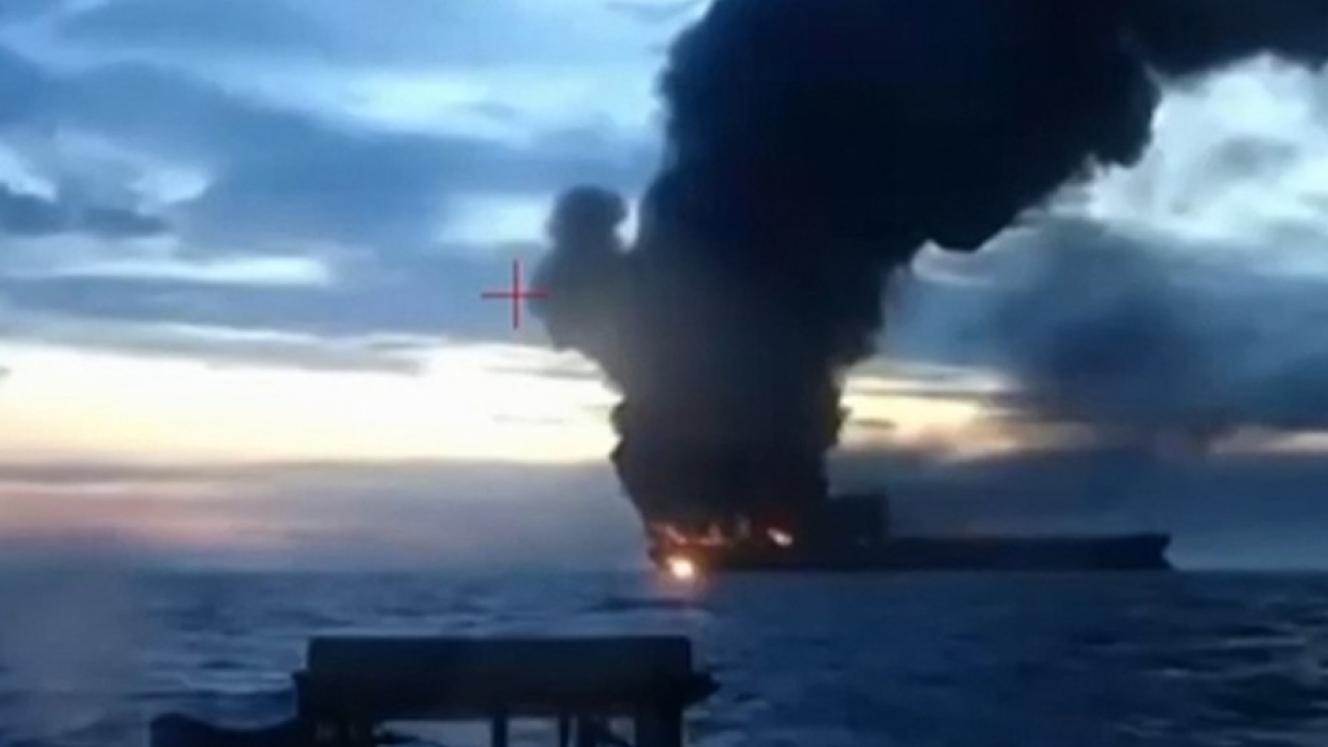
A sharp escalation in maritime hostilities has unsettled the Black Sea, after naval drones struck two commercial oil tankers in what industry observers describe as a turning point for civilian shipping security.
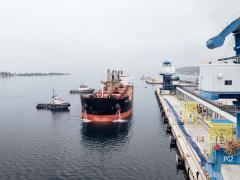
On November 29, the Kairos and Virat – widely believed to be part of Russia’s ‘shadow fleet’ – were hit by naval drones reportedly operated by Ukraine’s Security Service (SBU) in coordination with the Ukrainian navy.
Though both vessels were said to be unladen, fires broke out and significant damage was sustained. The incident marks the first confirmed attack on non-military, non-Russian-flagged commercial vessels in international Black Sea waters.
The immediate market reaction was swift. War-risk insurance premiums for voyages to Ukrainian ports rose from about 0.4% to 0.5% of a vessel’s value, according to market sources.
Rates for Russian-route Black Sea ports, already considered higher risk, climbed from roughly 0.6% to between 0.65% and 0.8%. Insurers warned that the demonstrated “intent and capability” of drone-based attacks, alongside Ukraine’s increasingly assertive operations, could lead to further escalation and potential reprisals, with commercial shipping likely to face heightened exposure.
The strikes drew a strong rebuke from Türkiye.
President Recep Tayyip Erdoğan condemned the attacks as “unacceptable”, emphasising the dangers they posed to safe navigation, human life and the marine environment. The tankers were reportedly hit just 35 miles off Türkiye’s northern Black Sea coast, within its Exclusive Economic Zone – a proximity that has deepened concerns among Black Sea littoral states over growing instability at sea.
Analysts note that the incident highlighted a broader shift in maritime conflict dynamics.
Naval drones – whether unmanned surface craft, sub-surface vessels or autonomous platforms – are now emerging as effective offensive weapons, blurring the long-standing boundaries between military zones and commercial shipping lanes.
Ukraine’s use of such drones is increasingly central to its naval strategy, offering a relatively low-cost means of targeting high-value assets. For commercial operators, however, the rise of weaponised drones represents a new and difficult-to-detect threat that adds further volatility to global trade routes.
The implications are significant. Rising war-risk premiums may lead to higher freight costs and logistical disruption, adding strain to already fragile supply chains. Some vessels may choose to reroute away from the Black Sea or other high-risk maritime zones, opting for longer and more expensive passages. Meanwhile, shipping companies, port authorities and governments may be compelled to invest in drone-detection systems, escort protocols or strengthened maritime security measures.
As commercial vessels find themselves increasingly entangled in the dynamics of modern conflict, the attacks underscore a growing challenge to maritime law and the traditional protections afforded to neutral, civilian shipping. With drone warfare now firmly embedded in naval strategy, the global maritime industry faces a new era of uncertainty – one in which the line between commercial and military risk is becoming ever harder to draw.