African countries must accelerate efforts to harmonise policies and regulations if they want to unlock meaningful growth in intra-continental trade, said World Bank country director Satu Kahkonen.
Speaking at the Infrastructure Africa conference currently under way in Cape Town, Kahkonen remarked that infrastructure investment alone would not be sufficient to address Africa’s trade constraints.
“The importance of harmonising policies and regulations is a major area of work that has to happen in parallel with, if not ahead of, infrastructure development,” she said.
While the African Continental Free Trade Area (AfCFTA) has significant potential to transform trade across the continent, Kahkonen stressed that agreements alone did not move goods.
“Trade agreements don’t move goods – infrastructure does,” she said.
Kahkonen identified three priority areas required to make the single African market a reality – connected transport corridors, integrated energy systems and interoperable digital infrastructure.
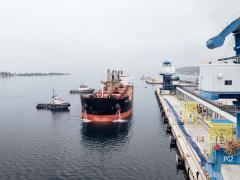
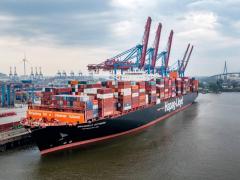
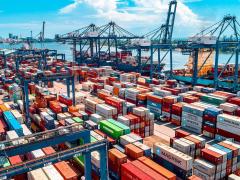
Transport corridors remain central to improving trade flows, but Africa’s geography and freight patterns require a more targeted approach than seen in other regions, she said.
“These corridors are the backbone needed for a single market.
“Africa is very different from China, where you can build infrastructure and demand follows. Here, distances are longer, population densities are lower, and production centres are often far from ports.
“We have to be very intentional about which corridors we prioritise.”
Reliable and affordable energy supply is another critical constraint to industrialisation and trade competitiveness.
“Without reliable energy, you will not promote industrialisation in Africa,” said Kahkonen.
“The continent has enormous renewable energy potential – hydro, gas, wind and solar – but these resources are not evenly distributed. Grid interconnections are essential to achieve scale and improve affordability.”
She pointed to ongoing reforms within the Southern African Power Pool as an example of progress, but noted that broader regional integration would be required across the continent.
Digital infrastructure, meanwhile, plays a key enabling role by linking transport and energy systems and improving efficiency.
“You may have transport and energy infrastructure, but without proper ICT networks, the system will not function efficiently,” she said.
Expanding broadband access, interoperable digital identification systems and instant cross-border payment platforms would help reduce friction and support trade.
Duncan Bonnett, a partner at industrial investment consultancy Africa House, said harmonised policies and regulations were needed to improve efficiencies to move freight faster.
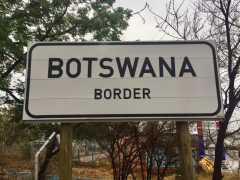
He pointed to conditions at major border crossings such as Kasumbalesa between Zambia and the Democratic Republic of Congo, where trucks face repeated inspections even after passing formal border controls.
“Eliminating unnecessary stops and harmonising procedures would cut transit times dramatically,” he said.