As dangerous goods increasingly creep into the supply chain undeclared, the very nature of consolidations is where the risk lies, according to Bheki Ngiba, manager: dangerous goods at the South African Civil Aviation Authority. “We are seeing a move towards smaller volumes of cargo being moved more frequently, but very often dangerous goods are not declared and are somewhere in the pallet that is somewhere
in the container. To physically search it all is near impossible,” he told FTW. “Unless declared dangerous goods are extremely difficult to detect when the cargo has been consolidated.” Using the courier industry as an example, Ngiba said drivers were picking up parcels at multiple points in the supply chain without any indication of what the cargo contained. “They are not allowed to open the package and by the time it reaches the airline it has
been consolidated,” he said. According to Johan van Niekerk, a cargo manager at SA Airlink, consolidated consignments are causing issues. “If you have a couple of mobile phones, for example, that need repair you pack them up and the courier collects without knowing what is in it. That is consolidated with other cargo and because no-one knows the contents, the parcel goes undeclared. From an airline perspective they are dangerous goods as the phones are all fitted with lithium batteries.” He said while a scanner at the airport would pick up on the batteries, it would require the the entire consignment to be unpacked to get to the handful of batteries. “Considering that cargo on
domestic flights only has to be at the airport an hour before departure there is no time to do that.” Ngiba said another concern for the SACAA with consignments where dangerous goods were often undeclared was in combining cargo in one hold that did not “speak well to each other”. “We simply have to know what it is that we are transporting – even if it is only so that we don’t put it with stuff that it can react to,” he said. “Considering that dangerous goods are normal day to day items that are sometimes not even dangerous on their own
but only in conjunction with other goods, it is something that we as an industry have to address and find solutions to.” He said discussions were starting between various stakeholders who would have to “hash it out”. “If we look at international trends where consolidated volumes are growing it becomes imperative to find controls and systems to improve safety now.” Ngiba called on industry stakeholders to share their viewpoints with the SACAA. “As a country this is a very important conversation to have,” he told FTW.
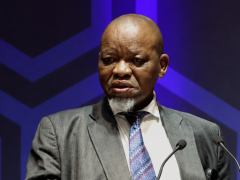
CAPTION: Unless declared dangerous goods are extremely difficult to detect when the cargo has been consolidated. – Bheki Ngiba