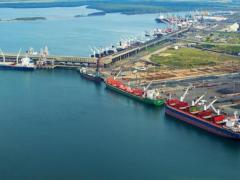
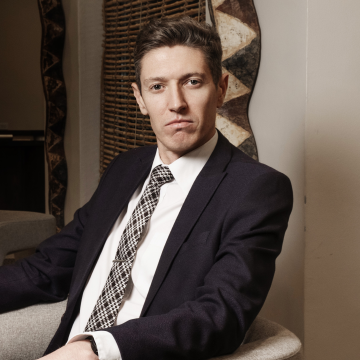
IMPROVED productivity at the Cape Town container terminal and a more jacked-up customs service are high on the wish list of Hans Duncker and Luigi Maree. “I personally think the situation at the terminal has worsened over the past year,” says Duncker, MD of Cape Town-based CTC Worldwide Logistics, an opinion wholeheartedly shared by Maree, a partner in the company, responsible for directing operations. Duncker and Maree believe what lies at the root of the problem is truck congestion, brought about by the time-consuming movement in and out of the terminal. “The port has got to do something about the slow turnaround of trucks, often an hour or more when it should be 30 minutes at most,” says Duncker. As business increases – in CTC Worldwide’s case more than doubling over the past year – so will volumes at the container terminal. Unless properly managed, this will give rise to even further congestion. He feels also once the terminal draught has been deepened, bigger, more heavily-loaded ships will start calling, resulting in further pressure on the terminal. Maree says another major problem is the inconsistency of load and discharge operations. “It varies so much. One week they will discharge 100 containers an hour and the following week 30 or 40. It’s not constant, that’s the problem.” Commenting on the terminal’s per crane per hour performance, which Transnet Port Terminals’ terminal manager Oscar Borchards pegs at 25, Maree disagrees. “In my opinion, the terminal is only managing 15 to 20 moves per crane per hour.” The partners are also unhappy with customs, a particular bugbear the difficulty in obtaining Euro 1 documentation, required by an exporter to qualify for a rebate at the end destination. Maree says customs has reorganised the Euro 1 documentation procedure which can now take up to 14 days to clear rather than two at most. He believes customs personnel should work flexi-hours and over weekends to catch up with the backlog.
Customs and port productivity need urgent attention
Comments | 0
© Now Media. This content is protected by copyright and may not be adapted or republished. If you would like to discuss cooperation opportunities, please contact: editor@freightnews.co.za.