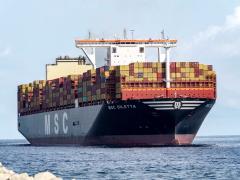
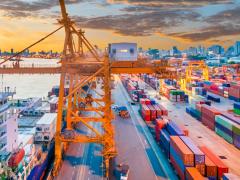
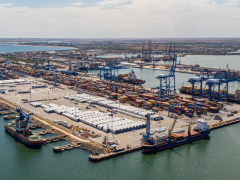
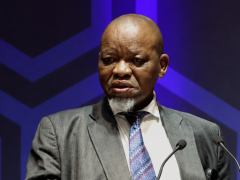
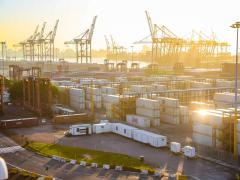
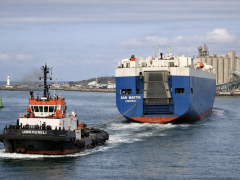
Cape Town port manager Sipho Nzuza dreams big. In his world nothing is impossible. Speaking to FTW from his high-rise office overlooking the Port of Cape Town, it is clear that he is equal to the challenge set him by Transnet National Ports Authority (TNPA) when he was appointed in August – to expand the port operations and turn around a profit. “I think we have not been thinking big enough,” he says. “We keep looking at South Africa’s economic hub, Gauteng, as the solution and then we are immediately faced with the challenge that we are far away from it in comparison to Durban. In fact, I think we need to think much bigger than Gauteng.” “This port remains one of the most important links to foreign trade,” said Nzuza. “Too many ships bypass us every day and we need to stop and take stock and ask ourselves why they are not stopping here even if their cargo is not intended for the Western Cape,” he says. “Is it a matter of efficiency, is it productivity, the quality of our products, the cost of doing business here? “We need to make our port attractive to each and every vessel that passes by and get them to call. The days of just waiting for our share of vessels to arrive, charge them their fee, collect their money and then send them on their way are over.” His intent is clear – it is not business as usual. “The whole thinking around our ports has to change if we want to see them attract more business and become profitable. It is now about saying this is a business and that means we have to see a return on our assets, sweat those assets and make sure we make a profit at the end of the day.” Of course this requires a swift mindset change from employees that is not always easy to achieve as change takes time. “Yes, it is a shock from what we are used to and how we have thought about business. We need to think about where we are getting those volumes we require and how we are going to entice vessels into our port. How can we differentiate ourselves from the other ports in the country and grow our business – I don’t have all the answers as yet as to how we can do that, but what I do know is that it can and will be done.” He believes part of the answer lies in markets abroad. “We should not be so Gautengfocused. We can think bigger, out of the box, be innovative in our approach and we will turn the tide. South African ports complement each other – we are not in competition with each other. It is finding our particular strength and developing that to bring about the increased business.” The Port of Cape Town has seen some major upgrades in recent years. The 840-metrelong refurbished container quay comes with an entrance vessel draught of 14.2 metres in any tidal conditions, making the container terminal the second deepest container port in Africa. “We have seen an approximately R4.3-billion expansion project at the port that will increase container capacity to one million TEUs per annum by 2013. The Ben Schoeman container berth has been deepened from the previous 12.7 metres to 15.5 metres, allowing bigger vessels to visit,” says Nzuza. The port, he maintains, is ideally suited to serve as a hub for cargoes between Europe and the Americas and Africa, Asia and Oceania. “We are essentially a container port. That is a strength that we must develop further.” Renowned for its handling of deciduous fruit, perishable and frozen product exports, the port is extending its focus to containers in this sector as more and more of these goods are being moved by container. “Without criticising anyone, if one looks at the Market Demand Strategy and one compares the investment that Cape Town is getting in comparison with the other ports then it is a relatively small amount of money. To me that is an opportunity to prove to our shareholders we deserve more investment and to work towards that goal.” CAPTION Sipho Nzuza … ‘How can we differentiate ourselves from the other ports in the country?’
CT port manager thinks big
Comments | 0
© Now Media. This content is protected by copyright and may not be adapted or republished. If you would like to discuss cooperation opportunities, please contact: editor@freightnews.co.za.