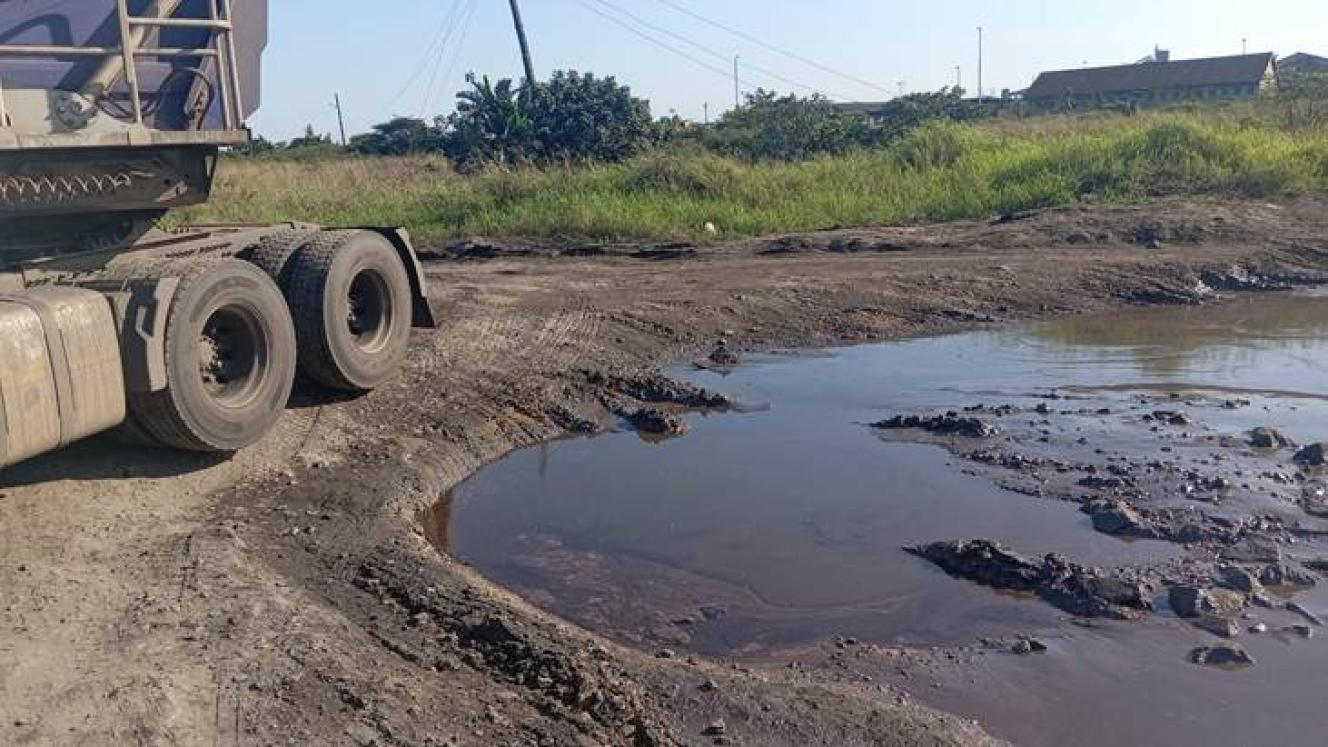
Delivering transport and energy infrastructure will be a key challenge for African governments as the mining sector continues to see unprecedented growth. Failure to deliver is going to result in a tough road ahead – especially convincing mining houses to remain focused on the continent. According to James Fungai Maposa, consulting manager for the industrial unit at Frost & Sullivan, already infrastructure challenges are affecting mining. “We are seeing mining projects drastically reducing targets and in some cases they are even being written off due to the lack of infrastructure,” he told FTW. With mining dependent on transport and energy infrastructure – not only to get capital equipment on sites to develop mines, but to get commodities from mine mouths to ports and eventually to end user markets – an increase in infrastructure delivery is required. And while African governments – along with the African Union – have responded with a renewed drive for infrastructure delivery, the growth being seen in the mining and minerals sector in recent years is already outstripping the improvements in infrastructure. In many countries already there has been a downscaling of expected output. In Mozambique alone mining house Rio Tinto, which bought into the coal district in 2011, have down-written coal output by some $3.5 billion to date. Maposa says this is because infrastructure is just not available to move the coal from the mine to the endmarket. Rio Tinto itself had hoped to move the coal via barges on the Zambezi, a viable option proven by extensive feasibility studies undertaken by the company, but the Mozambican government threw this off the table saying it was not putting coal on the river. Lars Greiner, materials management HOD, Worley Parsons RSA, says urgent infrastructure improvement is needed in countries such as Mozambique if mining is to continue operating at its current levels. “We have seen major improvements in infrastructure in Ghana and to a lesser degree in Nigeria and Tanzania, however there needs to be urgent improvements in the infrastructure of Mozambique, Kenya, Cameroon and Guinea. Without them, projects will face severe hindrances moving forward.” Maposa agrees, saying several countries – including South Africa, Nigeria, Rwanda, Ghana and to a certain extent Kenya – have announced sizeable infrastructure spend for the next few years, but even in these countries this won’t ease the pressure on the ground. “We are still seeing a lot of talk about intended projects and upgrades, but access to the required capital to get these projects off the ground seems to be one of the biggest problems being encountered.” In light of the global economy, Maposa says investors are more frugal and many are watching developments in Africa keenly. “The lack of infrastructure is worrying,” he told FTW. “The infrastructure shortfall is billions of dollars at present and if countries are unable to access the capital that is required to upgrade their infrastructure they are going to struggle to sustain the growth rates.” He said even in South Africa, where a host of infrastructure upgrades and improvements have been announced in the past two years, the roll-out on the ground was not happening as quickly. “Investors want a sure return on investments and they are looking very carefully at what projects to invest in and also which countries to put their money into.” According to Pramod Bagalwadi of DHL Global Forwarding Ghana, there are regions in Africa where one can clearly see the infrastructure upgrades taking place – especially in the east and west of Africa. “The African middle blocks are showing less progress and will need a lot of support internally and externally before we see any real infrastructure development as there are still issues around political stability and good governance.” Bagalwadi says for Africa to continue seeing infrastructure growth, political stability will remain key. “Take the example of Ghana in the west or Tanzania in the east or Egypt in the north, all of them have developed a decent level of infrastructure. But if there is no political stability then it cannot continue to grow as is apparent in the case of Egypt,” he said. INSERT & CAPTION Mining projects are drastically reducing targets and in some cases they are even being written off due to the lack of infrastructure. – James Fungai Maposa
Crunch time for infrastructure delivery
Comments | 0
© Now Media. This content is protected by copyright and may not be adapted or republished. If you would like to discuss cooperation opportunities, please contact: editor@freightnews.co.za.