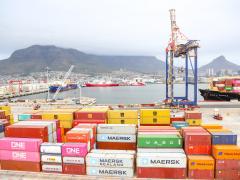
With Walvis Bay firmly established as one of the major gateways to southern Africa, the Walvis Bay Corridor Group (WBCG) is now looking for ways of transforming the transport corridors into development corridors, says chief executive officer Johny Smith. The plans form part of the evolution of the corridor group business model and structure. Over the past year, the group has received an increasing number of enquiries from operators and potential investors – which is a big change from the days when it had to go out to get business, he said. “The recession has been good for us. Logistics operators and shippers based in Botswana and Gauteng have had to think beyond South Africa and their traditional way of doing business. “They are now looking at Walvis because of the cost and time savings we offer. For many importers and exporters it is a more efficient port than Durban,” he says. With queries starting to stream in, the group’s head office in Windhoek is transforming from a pure marketing and facilitation organisation to one which can also respond to queries and facilitate development along the corridors. The WBCG is looking at South Africa’s Spatial Development Initiative (SDI) programme in order to identify ways of attracting investment along what are now wellestablished transport corridors. “We are following a systematic approach to development, and the time is now ripe to go to another level,” he says. The initial focus will be on the mining, tourism, agriculture and energy sectors, in addition to transport. Smith believes investors will be attracted by the continuing growth of traffic along the corridors. The Walvis Bay-Ndola- Lubumbashi route recorded the highest traffic growth of 75% in 2010, and a further 50-60% is expected this year. The upgrading and modernisation of the border post at Kasumbalesa between the Democratic Republic of Congo (DRC) and Zambia – which was facilitated by the WBCG – will see a continued growth in copper exports from the DRC and Zambia, he says. Logistics companies are also starting to use Walvis Bay for Malawian freight, and traffic between Walvis Bay and Zimbabwe is “also picking up”. The next big boost in volumes will come through the progress being being made in growing volumes along the Trans Kalahari corridor through Botswana, as more shippers based in Botswana and Gauteng choose Walvis Bay. Volumes are, however, down on the Trans Cunene corridor into Angola due to a combination of the global recession and the upgrading of Angola’s port and road infrastructure, he added.
Cost-conscious shippers consider Walvis over SA ports
Comments | 0
© Now Media. This content is protected by copyright and may not be adapted or republished. If you would like to discuss cooperation opportunities, please contact: editor@freightnews.co.za.