There is sufficient capacity on the
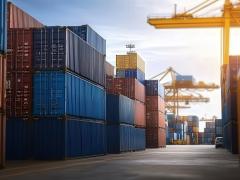
Walvis Bay corridors to handle
growth as the region’s economies
recover from the commodity
downturn, says Philip Coetzee,
general manager of Woker Freight
Services in Walvis Bay.
“When the market turns we will
be ready,” he says.
“The corridors are efficient,
starting at the port. There is also
sufficient road freight capacity at
present between Walvis Bay and the
Copperbelt,” he says.
This capacity should be attracting
volumes from South African ports,
believes Coetzee.
Economies of scale will drive
down shipping and road freight
rates significantly “if we can just
attract 5% of the SADC cargo
currently moving through South
Africa,” he says.
Internally, the
Manica Group
has moved its
logistics division
to Woker Freight
Services in
order to reduce
duplication
and to improve
efficiencies within
the company.
The division
was formed largely to
serve the oil and gas
industry which was
expected to be established in Walvis
Bay before the decline in the oil
price.
There are early signs of revival as
the region adapts once again to the
regular changes in the commodity
cycle.
Woker has seen an increase in the
volumes of copper going through
the port of Walvis Bay, as well as
chemicals and grinding media
moving north to the mines.
“Copper is
moving out, but
volumes are being
affected by the
imposition of a
beneficiation tax
by the Zambia
authorities,” he
says.
Zambia has
introduced the
Mineral Value
Chain Monitoring
Project (MVCMP) in order to tax
mineral exports more efficiently.
While worldwide resource taxes
average around 25-40 % of exports
for major resource-rich developing
countries, they amount to only 3–5
% in Zambia, according to World
Bank estimates.
INSERT
Woker has seen an increase
in the volumes of copper
going through the port of
Walvis Bay.
– Philip Coetzee
Corridors should be attracting volumes from SA ports
Comments | 0
© Now Media. This content is protected by copyright and may not be adapted or republished. If you would like to discuss cooperation opportunities, please contact: editor@freightnews.co.za.