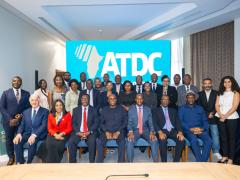
While trade barriers remain a growing concern, progress is being made in tackling some of the transport issues that have so far eroded Africa’s perishable logistics competitiveness. According to Alex von Stempel, director of Cool Logistics Resources, this was one of the take-home messages from the third annual Cool Logistics Africa conference that took place in Cape Town earlier this year. In the conference report released last week, Von Stempel said while inroads were being made in some instances, it was clear from the conference discussions that there was still a lot of work to be done. “Trade barriers are also not restricted to exporters, with imports also being affected,” he said. High tariffs on imported chickens for example – up to 82% on non-European Union whole birds – have been driving up costs for shippers and consumers, as well as forcing shipping lines to pay more for container positioning. Viewed from an even more strategic level, the “spaghetti bowl” of African trade ‘agreements’ is also hampering much-needed regional growth, according to John Purchase, CEO of the Agricultural Business Chamber. Current trade regimes, he said, lead to “nonsensical” situations such as table grapes from southern Africa being exported to Europe before being exported back to Dakar, Senegal. Africa, already the hungriest continent on the planet where another billion people is expected to be added to the population in the next 35 years, needs to sort out its trading relations to boost intra-regional food supply chains at the very least. Von Stempel said despite the proliferation of trade agreements, discussions at this year’s conference implied strongly that various tariffs and non-tariff-based trade barriers were utterly failing to protect indigenous producers, while seriously hampering trade liberalisation. INSERT Current trade regimes lead to “nonsensical” situations such as table grapes from southern Africa being exported to Europe before being exported back to Dakar, Senegal.
Consumers the losers in trade barriers war
Comments | 0
© Now Media. This content is protected by copyright and may not be adapted or republished. If you would like to discuss cooperation opportunities, please contact: editor@freightnews.co.za.