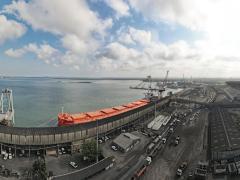
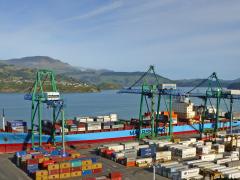
'Portnet gets off scot-free as shippers are forced to pay up' Alan Peat THE FEBRUARY 15 imposition by shipping lines of a Durban port congestion surcharge of US$75 a container has met with an immediate and adverse reaction from the shipper and forwarding communities. The "excessive" charge has been strongly challenged by cargo owners, and the lines accused of having an almost autocratic attitude about the cost-calculations leading up to the imposition of the surcharge on importers and exporters. But also violently targeted is the fact that it's the shippers and importers who are being charged, when the culprits for the congestion - Portnet - appear to be getting off scot-free. "The SA Shippers Council is very disturbed," said executive director Nolene Lossau. "Congestion has already cost everyone a lot of money, and has helped damage SA's reputation as a reliable exporter. "But the addition of this extra, massive cost on us is iniquitous." Besides being disturbed about the implementation of the surcharge, Lossau is confounded about how the lines have all managed to agree to this unilateral amount of US$75 per TEU (20-foot equivalent unit). "Different lines have different ships carrying different numbers of containers," she said. "How can they all face the same delay costs." According to her own calculations the average cost for the bigger container vessels is about US$20 000 per day. "Take a hypothetical average delay in Durban of 24-hours (twice what the lines are aiming at) and the ship loading and discharging the small total of 1 000 containers. You've then got US$20 000 divided by the 1 000 boxes - equalling a delay cost per box of US$20. "With more boxes handled, and a shorter delay period this cost gets even smaller. "How can the lines justify US$75 per container?" There's also the question of how much of their congestion losses of the last couple of months the lines stand to recoup if Portnet can't get their handling rates up-to-speed, and can't achieve that surcharge cut-off point of 12-hr average delays for two consecutive months. Durban handles around 73 000 containers a month. At US$75 surcharge per box, this means about US$5.5-million a month. Even deducting the transhipment boxes - which are a small proportion of the total - that comes to about US$10-m in two months. And that US$10-million figure was the one being bandied around by the To page 16 From page 1 shipping community as being the direct loss from the pre-Christmas surge, and strike-assisted congestion at Durban at the year-end. But the Shippers Council questions whether this is truly what the line's lost. "Bear in mind that Durban has been an inefficient port for a number of years," said Lossau, "and the shipping lines have already costed some delay for Durban (could be as much as 24-hours) into their standard freight rates. "So the full cost of the delays should not be recovered anyway! "We cannot help thinking that the shipping lines have seen an opportunity to try and generate additional revenue - at the expense of the importers and exporters of SA." With this in mind, the council has called on the lines to be totally transparent with their costings on the level of the surcharge.
Congestion surcharge raises hell
Comments | 0
© Now Media. This content is protected by copyright and may not be adapted or republished. If you would like to discuss cooperation opportunities, please contact: editor@freightnews.co.za.