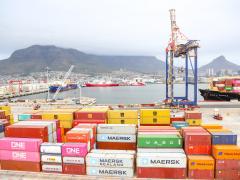
Competition regulation as it currently exists globally and in SA is effectively a strong barrier against any form of conference, according to Jenny Finnigan, a partner of Shepstone & Wylie in the commercial and corporate law department, who prepared an informative article exclusively for FTW. “Competition laws, as implied, are aimed at prohibiting conduct which restricts competition,” she said. “They regulate anticompetitive relationships between competitors and between firms and their suppliers or customers.” Finnigan also noted that these laws prevented firms that have power in a market from abusing that power. “The liner conference exemption which applied in Europe until 2008 allowed shipping lines to fix freight rates, co-ordinate shipping timetables and make joint decisions on the supply of maritime services,” she added. “That kind of conduct would usually be prohibited by most competition laws, including the SA Competition Act, as price fixing or market division between competitors.” However, the SA Competition Act allows the Competition Commission to issue exemptions – but under strict parameters. “It would be allowed only if it was deemed necessary to maintain or promote exports; promote the ability of small or blackowned businesses to become competitive; stop decline in an industry; or maintain or establish economic stability within an industry, designated by the minister responsible for that industry,” said Finnigan. The European Union (EU) liner conference exemption was originally issued in 1986 because the EU Competition authorities felt that it was necessary to improve production or distribution of goods or promote technical or economic progress. “Essentially the idea was that the conference would maximise efficient use of container vessels,” she added, “save costs and accordingly reduce or stabilise freight rates.” But, when the EU reviewed the effect of the liner conferences in 2006, it found that there was no evidence that it led to more stable freight rates or more reliable shipping services. The EU also concluded that the liner conference exemption did not have any positive effects for consumers; that it was more restrictive than necessary to achieve its goals; and that it increased the likelihood of anticompetitive information exchange between competitors. The result of this finding, according to Finnigan, was that the EU could not ensure that the liner conferences were subject to effective competition – and revoked the exemption. Looking at the local scene and its maritime market conditions, she asked if an exemption from the SA Competition Act would benefit both lines and shippers. To test this question, she referred to the Association of Shipping Lines’ (ASL) – as it then was – application for an exemption for the maritime transport services sector. This application has a chequered history, having being made initially during 2000. It was based on the grounds that the exemption would maintain and promote exports, promote the competitiveness of small business and was necessary for the economic stability of the industry. When the ASL applied for this exemption for a category of agreements and practices, it was in the context of similar exemptions which had been granted by the European Council to the Liner Conference and to the Liner Shipping Companies Consortia (Commission Regulation (EC) No 906/2009). The Competition Commission initially refused to consider the application because it said that an exemption “would accord to the maritime industry a special status … not provided for by the Act”. However, on appeal, the Competition Appeal Court found that the Commission was wrong and ordered it to consider ASL’s application. The ASL resubmitted, and the new application was gazetted during 2006. “But,” Finnigan said, “one of the grounds of the exemption was industry designation and the ALS eventually failed to get the necessary designation. The ASL’s application was eventually withdrawn in 2012 “The shipping industry is critical to, and has a direct effect on, the SA economy. Whether or not it should be exempted from the Competition Act depends on whether its needs fall within the grounds for exemption listed in that act. “Liner conferences usually involve some level of price fixing and market division. As these are regarded as the most heinous of competition offences, it will take a great deal of persuading to get the Competition Commission to exempt such conduct, especially because the EU has seen fit to revoke its long-standing exemption.” INSERT & CAPTION An exemption would be allowed only if it was deemed necessary to maintain or promote exports. –Jenny Finnigan
Competition regulation the biggest detractor - Finnigan
Comments | 0
© Now Media. This content is protected by copyright and may not be adapted or republished. If you would like to discuss cooperation opportunities, please contact: editor@freightnews.co.za.