South African perishable exporters face a variety of challenges when it comes to cold chain management – from the rising cost of cold storage and transportation to the shortage of facilities.
According to Lucien Jansen, CEO of the Perishables Products Export Control Board (PPECB), the guardian of quality for the country’s perishable exports, there’s growing awareness of the importance of cold chain management.
“There are, however, some very real challenges that our exporters have to contend with such as the rising costs of cold storage and transportation costs in a troubled economy,” he told FTW.
“While there is a shortage of cold storage facilities, there is also a problem of deteriorating facilities due to high maintenance costs – and that affects availability while demand is increasing.”
Reefer containers and specialised reefer vessels were also in short supply, he added. In addition, approximately 10% of equipment used for export was rejected during inspection, prior to loading, he explained to FTW.
The PPECB mitigates a large portion of the risk through good cold chain management, even en-route to destinations, which means only a small portion of exports is lost internationally due to lack of cold chain management.
“For the past financial year 5 994 containers were reported for reasons including incorrect set point, incorrect ventilation setting, no power supply and alarm malfunction while 19 containers were rejected due to out of temperature protocol and damaged external panels,” he said.
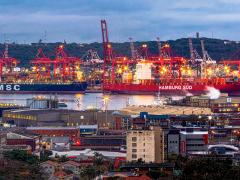
Commenting on congestion at the ports in particular he said this was a major concern as the situation was not improving, especially during the peak seasons.
“This affects the turnaround time for trucks that deliver reefer containers from an empty depot to the loading facility, then to the port or holding facility after packing. After dispatching the container, the truck is required to return to an empty depot to collect another container and repeat the process,” he said.
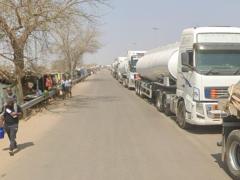
“Congestion in the ports results in many full reefer containers being left without power while awaiting entry to the port. Reefer containers that are powered by GENSETs while standing in queues burn more fuel to keep the GENSET running. This then increases the cost which is ultimately borne by the producer.”
INSERT AND CAPTION
Around 10% of equipment used for export was rejected during inspection. – Lucien Jansen
CAPTION
A PPECB staff member inspects fruit quality ahead of export.