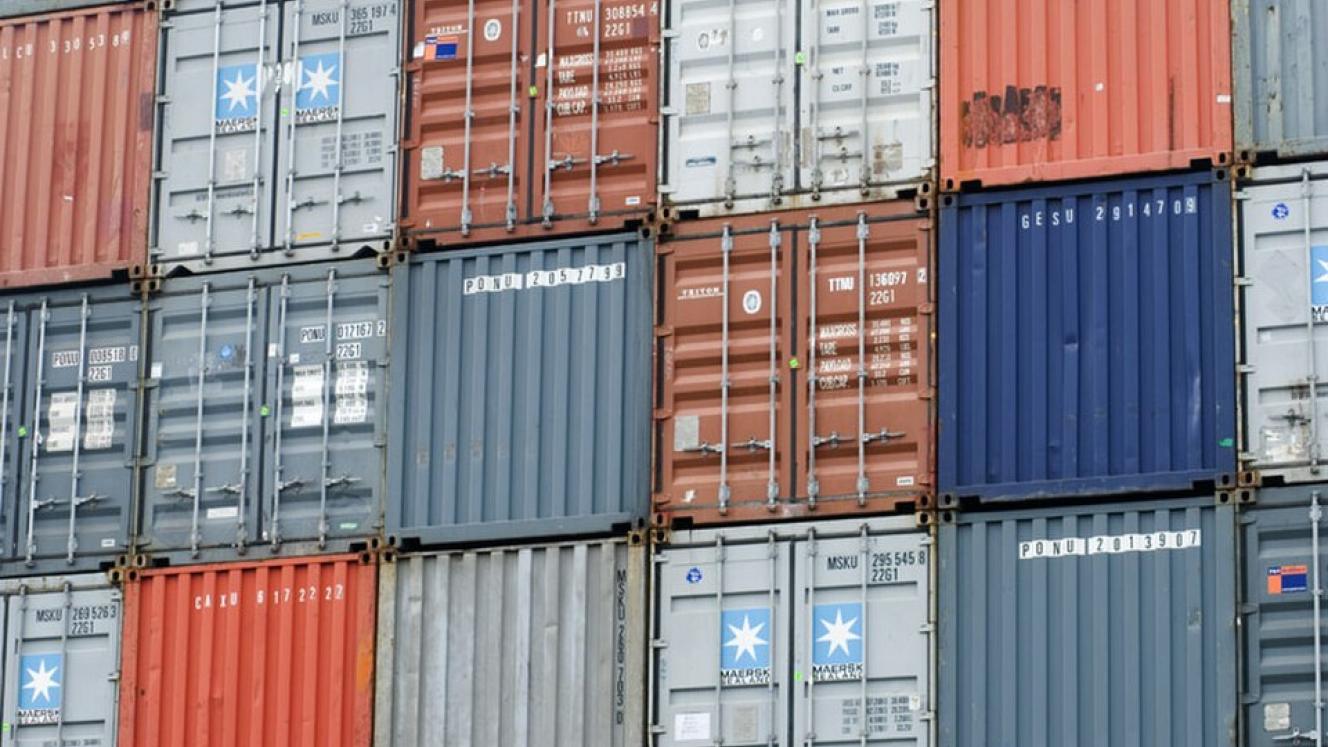
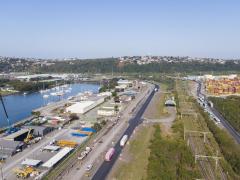
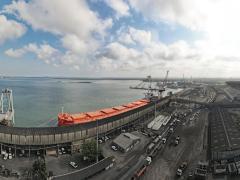
The City of Johannesburg considers City Deep an “important development” for the economic growth of the city and therefore fully supports the Johannesburg Chamber of Commerce and Industry (JCCI) and City Deep investors in its battle to retain the area as an inland port. So said deputy director at the City of Johannesburg, Lebo Ramoreboli, speaking at a JCCI workshop on the new Customs Control Bill (CCB) and the impact it will have on inland ports, particularly City Deep. “We are investing R122 million in City Deep through the Department of Transport to, amongst others, create a staging post in Rosherville,” she said, adding that the City would lobby for more land from Transnet and would like to work with the freight industry and Johannesburg business to explore optimal land development that will “facilitate trade” in Gauteng. Ramoreboli said that the City had plans to develop City Deep as a cross-border trade precinct, opening offices and retail sections as well as developing it as an industrial hub. “The City of Johannesburg has already invested in the fresh produce market and we are exploring the possibility of creating an on-site food processing facility there to create value-added exports,” she said. JCCI director and former president, Pat Corbin, has been vocal in his concerns that the new CCB, in conjunction with the proposed new Customs Duty Bill, will shut down City Deep as an inland port. He told delegates at the workshop that he expected the new Bills to be in effect before the national elections in May this year. “The authorities do not accept the fact that by moving the Customs release point back to the coast, a vessel manifest will terminate at the coastal port. There will not be the option of a multimodal bill of lading and seamless inland movements, as all boxes or the unpacked contents will remain at the coast until cleared and released by the line before being reconsigned,” Corbin said. At the workshop, CFR managing director Martin Keck highlighted the challenge the new Bills could bring for groupage operators. “There will be inconsistencies with the f low of cargo as, for example, 14 pieces of cargo in one consolidated container may be correctly labelled, but one may not. That means all the cargo will be exposed to extra handling, which increases risks,” he said. He added that this would call for greater capacity in Durban (port of origin) and less capacity in Johannesburg, which would inevitably lead to job losses. “Furthermore congestion in Durban will further increase which could see shipping lines bypassing other South African ports, such as Cape Town, to avoid further delays,” said Keck. This strengthened Corbin’s argument that the loss of City Deep as an inland port would not only affect Johannesburg but South Africa as a whole. This will also affect the country’s seamless movement of goods into the Southern African Development Community (SADC) countries. “South Africa could lose its status as a hub, and ultimately, its gateway status,” Corbin warned. Ramoreboli has committed to addressing this with the provincial government but appealed to the industry to work with the City to put forward a strong business case and motivate why the area is crucial as a freight and logistics hub. “We also want to pool our resources and work with Ekhurhuleni to develop City Deep and Johannesburg further,” she said, suggesting that the City and JCCI meet “within the next two weeks” to formulate a plan and set parameters. INSERT & CAPTION We are investing R122 million in City Deep. – Lebo Ramoreboli CAPTION The City of Johannesburg has invested in the Johannesburg fresh produce market in City Deep and is exploring the possibility of creating a food processing facility there.
City throws its weight behind JCCI Cusoms Bill battle
Comments | 0
© Now Media. This content is protected by copyright and may not be adapted or republished. If you would like to discuss cooperation opportunities, please contact: editor@freightnews.co.za.