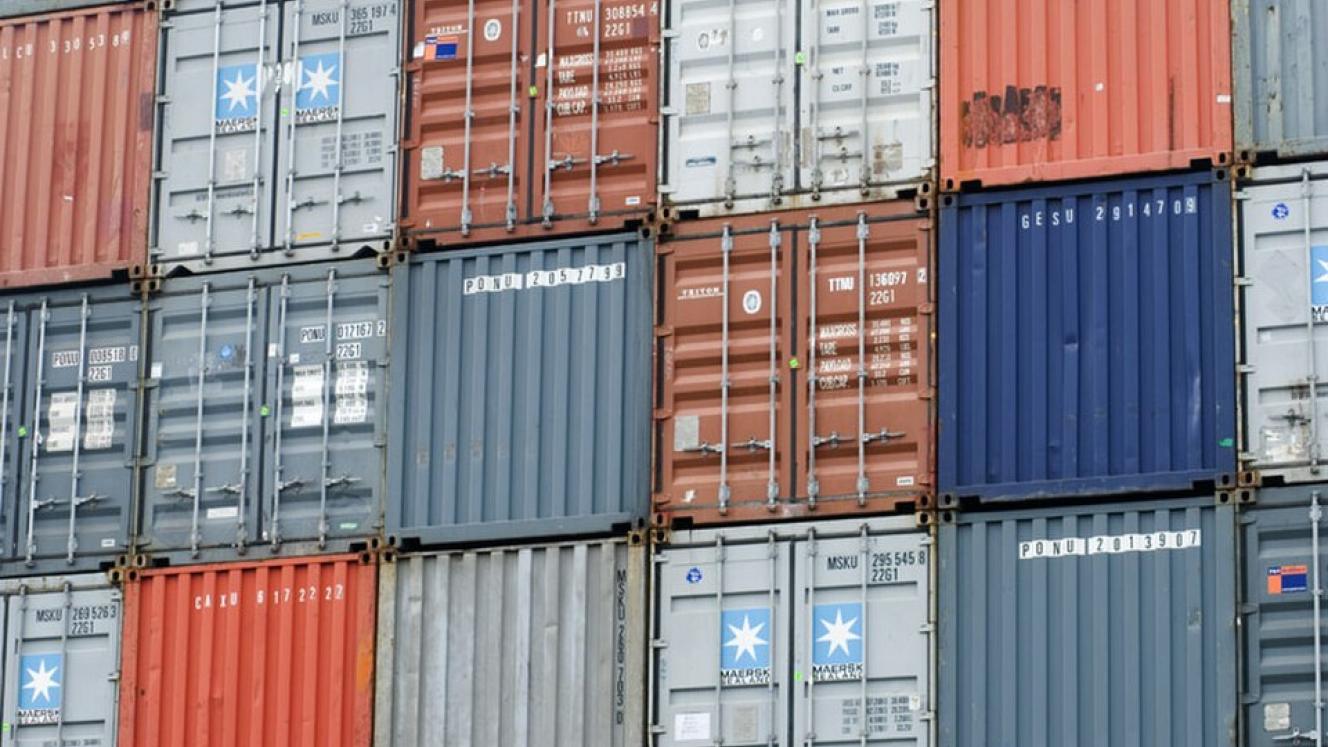
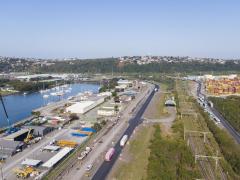
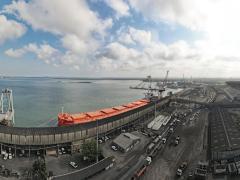
Questions have been raised about the vast sums of money being invested in developing the City Deep Freight Hub, which is suffering from declining volumes of through traffic. This joint investment between the Johannesburg Roads Agency (JRA) and Transnet has been loudly and proudly heralded in two major newspapers and on a radio station. “Work has already started on a massive logistics corridor stretching between Durban and the central provinces of the Free State and Gauteng,” according to information released to the media. This includes the building of a R2.3bn container terminal at City Deep (which serves the Natcor rail corridor between Gauteng and Durban) and a R14.9bn procurement of rolling stock for the rail line which will service the corridor. And this latest billion rand investment consists of a R122-million development programme for the roads leading to City Deep, and R900m being spent by Transnet on the terminal itself. The roads projects that are currently in the final stage of design are the widening of Rosherville Road and the Rosherville Road Bridge, the extension of Bonsmara Road and the development of the Cleveland Road Bridge. Also, investigations have almost been completed into the extension of Houer Street as well as the development of new links or ramps to the N17. This, said the JRA, would ensure increased mobility to and from the terminal and the freeway, and the projects should start later this year. While the roads development may stand good for other businesses in the area, and others using them in transit elsewhere, just how much justification is there for the Transnet upgrade of City Deep? If you’re planning a market-demand capital project you need to assume growing business, and the extra revenue that will come with it. The Transnet upgrade, said newspaper reports, would result in the modernisation of the inland container terminal to handle increased volumes of operations. But where is this extra volume to come from? Volumes moving on rail are actually falling. Dave Watts, maritime director for the SA Association of Freight Forwarders (Saaff), worked from the Transnet Port Terminals (TPT) monthly key performance indicators (KPI) – while deducting the numbers of transhipments that don’t move landside (‘Interesting transhipment anomaly on Durban-Jo'burg route’ FTW November 2014). “Based on these figures, in the short term there is not a road-to-rail move. It’s actually the other way round,” he said. And, indeed, most of the rail-to-road swing is customer generated, according to Watts. But whatever the reasons, Transnet’s claims of growing volumes being shipped by rail just don’t hold water. How and where are they coming up with these figures? “I can’t get my mind round it,” Watts said. INSERT In the short term there is not a roadto- rail move. It’s actually the other way round. – Dave Watts CAPTION The upgrade of City Deep involves a R122-million development programme for the roads leading to City Deep, and R900m being spent by Transnet on the terminal itself.
City Deep upgrades questioned in light of falling rail volumes
Comments | 0
© Now Media. This content is protected by copyright and may not be adapted or republished. If you would like to discuss cooperation opportunities, please contact: editor@freightnews.co.za.