China’s Belt and Road Initiative (BRI) is unlikely to have any positive impact on or benefits for South Africa according to Africa House director, Duncan Bonnett.
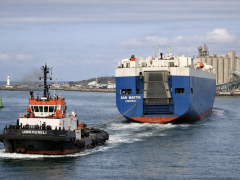
This opinion was echoed by the Johannesburg Chamber of Commerce and Industry (JCCI) who noted that it was highly likely that the country’s ports would be completely bypassed once the BRI was completed.
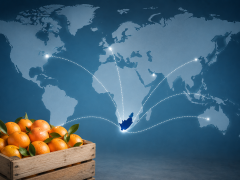
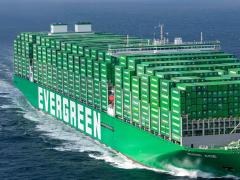
The BRI, often described as the 21st century “silk road”, is a trade and development strategy – proposed by the Chinese government and spearheaded by president Xi Jinping – that comprises overland corridors and maritime shipping lanes connecting Asia, Africa and Europe. It spans some 65 countries, representing 60% of the global population, about a third of the world’s GDP, and completely excludes South Africa as a sea freight route option.
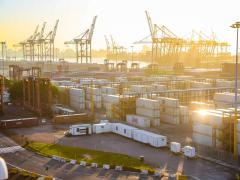
“If you look at the ports targeted by the BRI, such as Dar es Salaam and Djibouti, you can see that the Chinese are looking to improve transport infrastructure in the entire eastern seaboard and adjoining hinterlands,” said Bonnett. “This will definitely have some negative impact on our ports.”
The JCCI pointed out that ongoing problems faced in South Africa’s ports, along with the increased availability of other options as a result of the BRI, would increase the likelihood of shipping lines bypassing our ports. Inefficiencies, inconsistencies and unreliability of port infrastructure cause delays and congestion while high port charges and the difficulties faced by truckers in accessing the ports are additional detractors.
Trend analyst Guy Lundy told FTW that a possible means of ensuring SA ports were not bypassed was to take advantage of the huge number of investment opportunities available from China.
“We need to sell South Africa as an investment destination for the BRI initiative,” he said. “Once the BRI becomes a reality and gains momentum, it will be problematic for us if we are not a part of it.” He said that public-private partnerships that incorporated the BRI were key and that the country was in a better position than last year to drive collaboration that would attract such investment.
“Being left out of China’s Silk Road project won’t necessarily move our economy backwards but it will mean we’d miss out on potential growth and we need as much growth as we can get,” added Lundy. But Bonnett said that South Africa was too far south on the continent to be directly considered for the BRI and that any investment by China into our port or transport infrastructure would need to be carefully managed.
He pointed out that government would need to make sure that the benefits of any investment would accrue to South Africa – and more specifically, domestic South African companies. The JCCI has also noted that the bypassing of South Africa’s ports may not be all too bad as it could reduce congestion at the Port of Durban and would only affect Chinese shipping lines.
Meanwhile, Bonnett believes that the larger issues faced by the country from China’s BRI is not its impact on our ports but rather its impact on domestic manufacturing and exports.
“The more integrated East Africa becomes to the Middle East, the less the Middle East will look to South Africa for supply,” he said. “The BRI will turn the region’s focus to Asia and away from South Africa and we are already in a precarious position within that market.”
INSERT
China’s BRI spans some 65 countries, representing 60% of the global population, and about a third of the world’s GDP.