Container line
customers are
increasingly
dissatisfied with
the service they’re receiving
from carriers, a joint
inaugural Drewry Maritime
Analyst and European
Shippers’ Council (ESC)
survey has revealed.
“Carriers have overlooked
the wishes of forwarders and
shippers for consistency and
quality of service, probably
because of the need to
reduce their costs in a lowprice
market,” said Philip
Damas, the head of the
logistics practice at Drewry.
He pointed out that
this attitude meant that
customer loyalty was very
low in the industry and
was part of the reason why
shippers chased the lowest
price.
“We see that shippers
want to be treated not only
as customers, but also as
partners, when discussing
their container transport
requirements. In times
when supply chains are
becoming more and more
complex, partnership is of
key importance
and
unfortunately
it is
missing,” added
Fabien
Becquelin,
maritime
policy manager
at ESC.
He said
the airfreight
industry
faced similar
problems but
had more
recently come
to the conclusion that
partnership was the only
way out and it was reaching
out to the shippers.
Becquelin said that
container market relations
between carriers and
shippers tended to worsen
during crisis points such
as when service capacity
was limited or when there
were equipment shortages,
leading to contract terms
being broken.
“Usually, it is
the smaller
shippers
that suffer in
these cases,”
he said.
According
to Becquelin,
a fear of
reduced
competition
from a
f lurry of
merger and
acquisition
(M&A)
activity is weighing heavily
on shippers’ minds at the
moment. He commented
that despite last year’s
low freight rates, shippers
remained dissatisfied,
pointing out that when
carriers offered so-called
“premium services” at higher
rates, these were generally
services customers expected
as standard.
Damas said there was a
lack of incentive for carriers
to invest in value-added
services such as innovative
information technology and
back office support staff.
“Competitors all offer the
same service and it’s not
like most shippers have a
choice to switch to the much
more expensive airfreight
mode – so carriers feel they
can continue to offer the
same low-quality service
without much fear of losing
business,” he said.
Shippers and forwarders
clearly see the necessity
for the carrier industry
to invest in IT and to
balance the needs for cost
competitiveness and for
more predictability and
reliability.
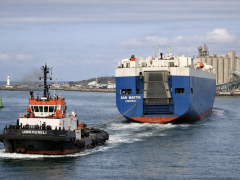
INSERT AND CAPTION
Carriers have
overlooked the
wishes of forwarders
and shippers for
consistency and
quality of service.
– Philip Damas