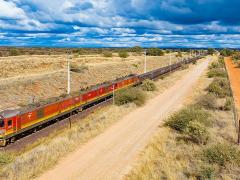
Transporters are working hard at ensuring that the costs of operating the Trans Kalahari Corridor are not carried by the truckers. Transporters are seen as “cash cows” by the operators of transport corridors, and are used to provide funding whenever needed, says Barney Curtis, executive director of the Federation of East and Southern African Road Transport Associations (Fesarta). Curtis was speaking to FTW after a meeting of the Trans Kalahari Corridor management committee in Gaborone on May 16 and 17. He says Fesarta recognises that it is important to get the corridor “on its feet and sustainable,” and that sustainable funding is needed for it. At present the corridor initiative is being funded by the governments of Namibia, Botswana and South Africa, but this funding would not go on indefinitely. The transporters want the corridor to follow the example of the Dar es Salaam (DSM) Corridor Group, where the levy is placed on the owner of the goods rather than the transporter. “We believe that the end user of the goods should be responsible for the financial sustainability of the secretariat, and that a fee should be charged on every ton of goods moving along the corridor. “This was proposed and agreed on the Dar corridor,” he says. Fesarta’s concern is that decisions taken on funding the Trans Kalahari Corridor will set a precedent for other corridors in the region. It could see road transport carrying the full cost for a corridor that includes rail in its mix. Fesarta is keen to see the Trans Kalahari Corridor working to its full potential, as it would save on 400 kilometres of travel between Gauteng and Walvis Bay. “Four hundred kilometres is a big difference, particularly with the fuel prices,” he says. Truckers continue to favour the “Upington Route” because of fewer border delays and less danger of being involved in an accident. Stray animals on the leg through Botswana pose a big danger to trucks. Work has started on fencing a section of the road through Botswana and some progress is being made on speeding up the transit through the borders, he says.
‘Cargo owners should carry the costs of corridor funding
Comments | 0
© Now Media. This content is protected by copyright and may not be adapted or republished. If you would like to discuss cooperation opportunities, please contact: editor@freightnews.co.za.