While manufacturers and transporters are bracing themselves for the impact the Carbon Tax Bill – effective from June 1 – will have on their bottom line, proponents of the bill expect it to boost global trade and investment. Addressing the standing committee on finance recently, deputy director general in the National Treasury, Ismail Momoniat, pointed out that the impending Carbon Tax Bill would help protect South African companies against punitive trade actions for failing to reduce greenhouse gas emissions. “Companies worldwide are feeling the pressure to reduce carbon dioxide (CO2)
emissions which are a global problem – and local companies would find more international companies wanting to trade with South Africa once the bill is implemented,” he said. The bill has been in the pipeline since 2010, while finance minister Tito Mboweni tabled it in parliament late last year. Momoniat said his department had, over the years, attempted to address concerns raised by stakeholders. “While the tax will affect a company’s bottom line, that is the way the world is moving,” he said. World Wildlife Fund
(WWF) South Africa head of policy and futures, Saliem Fakir, pointed out that while the tax was aimed at lowering harmful emissions, it was also introduced to stimulate new growth, new technologies and enterprise, and encourage the development of new product lines, which would stimulate new investments and jobs. “The aim of a carbon tax is to disincentivise future carbonintensive investments. It will also encourage investors to start pricing CO2 emissions as a risk in the way they make decisions and capital allocations,” he explained. Due to the Paris Agreement most countries
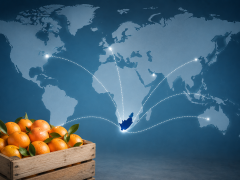
would probably have a form of carbon pricing by the middle of the next decade, he added. “The aviation industry is moving in that direction and the shipping industry will soon follow suit,” said Fakir. If South Africa lagged behind in dealing with carbon pollution, this could cost the economy. “South Africa could lose valuable trading partners when other countries impose border carbon adjustments on our dirty exports.” National climate change officer for WWF, Louise Naudé, also dispelled the “scare-mongering” of massive projected job losses by heavy
CO2 emitters, highlighting in a blog that a Nedlac Carbon Tax Task Team was investigating strategies and measures to deal with labour market shifts in a low-carbon transition which would be in the form of sector job resilience plans. “We do workers no favours by only reacting defensively and failing to facilitate new low-carbon opportunities.” She reiterated that South Africa’s economic development should not be held hostage to special pleading from high-carbon companies who represented themselves as “business” and even “the economy”, and blamed job-shedding decisions on the carbon tax and other measures to shift to a lowcarbon economy. “Carbon complacency will catch up with us. Opportunities for economic growth and development are not to be found in the rear-view mirror of a 20th Century economic paradigm,” commented Naudé.
CAPTION:
South Africa could lose valuable trading partners when other countries impose border carbon adjustments on our dirty exports. – Saliem Fakir