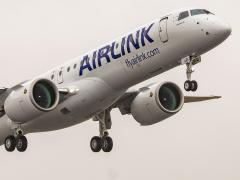
The European Union’s Emissions Trading Scheme continues to draw strong criticism from several quarters, with the International Air Transport Association one of its most vociferous detractors. “The frequent and robust reiteration by the EU directorate general for climate action that nothing can be done to defer or amend the European scheme is not helpful,” Iata director general and CEO Tony Tyler said recently. “Europe’s trading partners are looking for signals that it is prepared to find solutions with the international community beyond its current plans in an agreement through the Icao process,” he said. As Iata explains in its latest monthly magazine, under the EU proposal, an Air China jet starting up its engines in Beijing to prepare for a flight to Europe becomes immediately accountable to the EU for emissions over its sovereign territory, as well as those over every country it flies across on the journey to Europe. “Not surprisingly, China is one of many countries that has argued quite forcibly against the regulation,” according to Iata. India has also formally prohibited its airlines from participating in the EU ETS. Iata’s director for aviation environment, Paul Steele, points out that a global industry needs a global solution. The International Civil Aviation Organisation is therefore the correct forum to broker a deal that is acceptable to all parties, including developed and developing economies, he said. Among the options being explored by Icao is a straightforward carbon offsetting scheme. This would use 2020 as a baseline. Beyond 2020, if a state or an airline operator grew its carbon emissions, it would have to buy carbon credits to cover the excess. Another possibility, Iata suggests, would be an offsetting scheme combined with extra revenue. There would be an offsetting cost, but in addition to this there would be a further cost associated with the amount of credits being bought. A third suggestion would be a global ETS, along the lines of the European model, but it could also include commitments on how to spend any money raised. The ideal outcome, in Steele’s view, would be to confirm an agreement by the next Icao assembly in September this year. “That would mean having a decision on what scheme, as well as the details of that scheme, by the end of 2012.” South African Airways in the meantime has announced a increase in its fuel surcharge on flights to and from Europe of between Є1-2 per passenger on flights booked from July 1 in order to comply with the EU ETS. And while the airline is taking steps to comply with the scheme, CEO Siza Mzimela told Business Report recently that she fully supported Government’s proposal that the EU suspend its ETS for two years so that a globally acceptable and equitable solution could be reached through negotiation with Icao. Caption: SAA takes steps to comply ... but fully supports ETS suspension.
Calls continue for EU to drop emissions scheme
Comments | 0
© Now Media. This content is protected by copyright and may not be adapted or republished. If you would like to discuss cooperation opportunities, please contact: editor@freightnews.co.za.