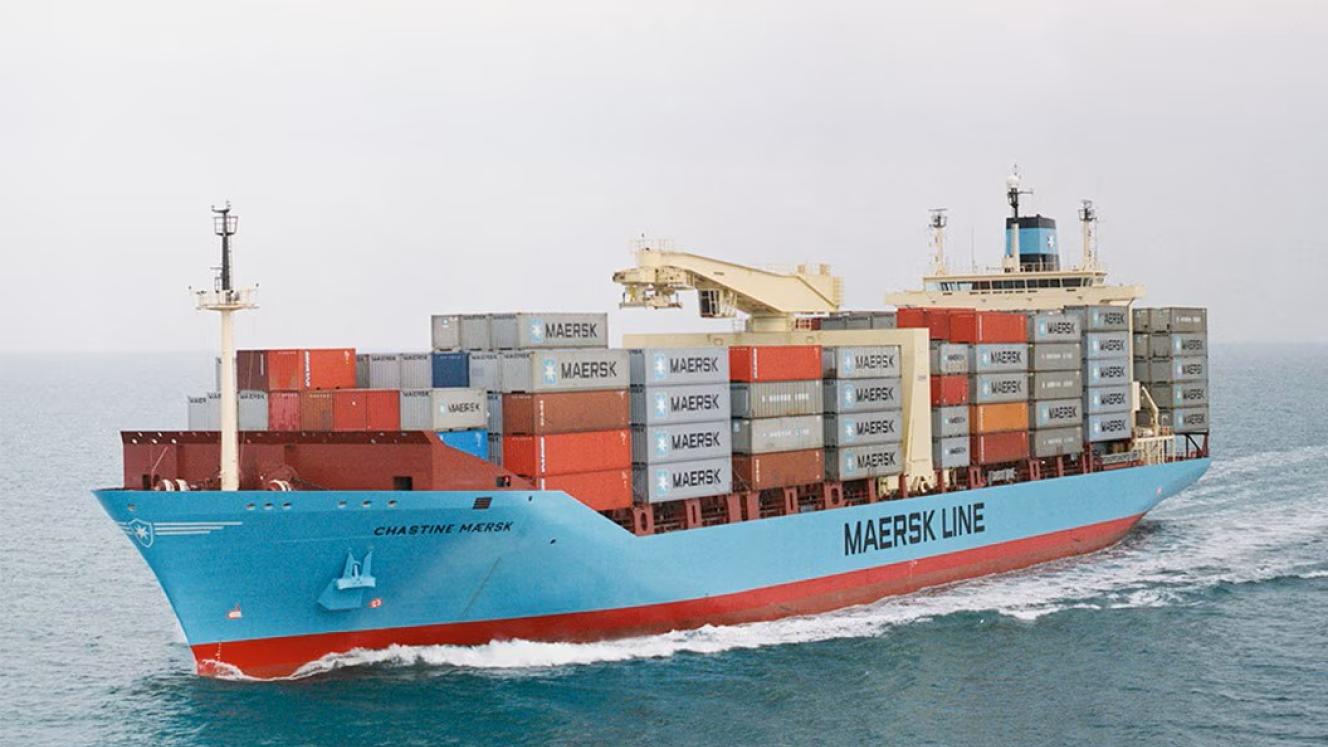
While the straitened circumstances of the world economy have seen most shipping lines downsizing, a notable exception has been the SA–Europe Container Service which this week introduces additional capacity to cater for strong demand from the Cape reefer industry. “With the demise of the Sails service late last year, there was an immediate reduction in available reefer plugs,” Deutsche Afrika Linien managing director Ron Frick told FTW. “With no new capacity to replace it, the reefer industry made strong representation to the lines to assist them because they saw there would be a bottleneck – particularly in the peak season from mid March to August/ September where you have a cross-over of deciduous and citrus running simultaneously.” In addition, some of the bulk reefer ships that used to call have reached an age where many are no longer economically viable because of high fuel consumption – or they’re trading to other parts of the world where returns are better, like Chile and South America. “Realising the gap, the Saecs member lines – of which DAL is a joint decision-maker – chose to introduce northbound charters, to be known as the Reefer Express, to cope with the reefer period,” Frick told FTW. It’s a dedicated service, initially with only one port of load out of Cape Town to two ports of discharge – Thamesport and Antwerp. Later in the season, depending on demand, the service could add Port Elizabeth and/or Durban as additional load ports. And the timing couldn’t be better. According to industry insiders, the table grape season was delayed by two weeks and the rest of the stone fruit – plums and nectarines – haven’t ripened in the normal period so suddenly the packing season is concentrated into a very short space of time. “The reefer industry needs somewhere to put that fruit and make sure it gets into the European market as soon as possible,” says Frick. “And although there was concern that the economic slowdown in Europe would lessen demand for reefer, our clients report that the slowdown has been less dramatic than other industries – a reduction in sales of 7-10%. “But with the housewife in Europe buying down, the weaker rand has helped to keep the market buoyant in comparison with competitors in the rest of the southern hemisphere,” says Frick. More good news comes from Malawi where indications are that tobacco crops will be very good.
Buoyant reefer industry welcomes launch of ‘Reefer Express’
Comments | 0
© Now Media. This content is protected by copyright and may not be adapted or republished. If you would like to discuss cooperation opportunities, please contact: editor@freightnews.co.za.