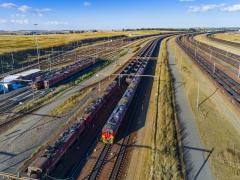
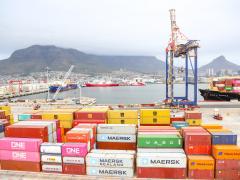
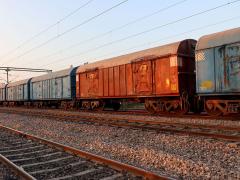
The long-term projects to develop the Trans-Kalahari Railway will give the Trans- Kalahari Corridor (TKC) a complete shape, according to Namibia’s minister of works and transport, Erkki Nghimtina. The railway and port projects are expected to unlock Botswana’s massive mineral potential on a costeffective basis. This follows the success of the Trans-Kalahari highway – a surfaced road linking the Port of Walvis Bay with Botswana and the industrial powerhouse of Gauteng. The route stretches over 1 900 kilometres – from Walvis Bay to Windhoek- Gaborone-Johannesburg/ Pretoria. It is presently supported by a railway line from the Port of Walvis Bay, via Windhoek to Gobabis in eastern Namibia – which is 110 kms from the Buitepos border post with Botswana. In the town, transhipment facilities are available, and it currently serves as an important link to Botswana and SA on the tarred Trans- Kalahari Highway. Gobabis acts as a road-rail hub for goods crossing from the mines of landlocked Botswana to the Port of Walvis Bay, and for consumer goods being imported into Namibia from Johannesburg. But the mammoth Trans- Kalahari Railway and Walvis Bay dry port will supersede this time- and cost-consuming intermodal link-up. When completed, the project will involve a 1 500-km railway line connecting the eastern Botswana coal-field to the country’s copper, silver and uranium-rich western districts through to Walvis Bay in Namibia where Botswana plans to build a dry port. The port will be developed on a 36 233-sqm piece of land granted by Namibia under a 50-year lease. “Botswana and Namibia through the support of the World Bank conducted a pre-feasibility study for the railway link between Botswana and Namibia,” said Nghimtina. “CPCS Transcom, a Canadian consultancy firm, did this study – and concluded that the Mmamabula Coal deposits in Botswana would support the impending railway line.” However, he added, this railway will not be dedicated to coal only, but will be utilised for a wide range of commodities. “What remains,” Nghimtina said, “is to encourage the development of spatial development initiatives (SDIs) along this corridor.”
Botswana coal deposits support grand plan for Trans-Kalahari railway
Comments | 0
© Now Media. This content is protected by copyright and may not be adapted or republished. If you would like to discuss cooperation opportunities, please contact: editor@freightnews.co.za.