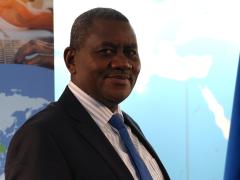
The blue economy could become the fifth-biggest economy in the world, eclipsing sectors such as pharmaceuticals and fuel, says Charlina Vitcheva, Director General of the European Commission’s Maritime Affairs and Fisheries.
Speaking to Freight News during the Ocean Innovation Africa Summit 2026 at the Durban International Convention Centre, Vitcheva said the ocean economy’s spectrum – from traditional fisheries and maritime transport to emerging offshore energy, wave power and algae-based carbon removal – was growing exponentially.
“There are many sectors that qualify as blue economy. We have two big traditional sectors – fisheries and aquaculture – which evolve with different dynamics and maritime transport.
“And then you have new sectors that are joining the blue economy, for example, offshore energy, which can be ocean energy.”
Talking about swells and sea surges, Vitcheva said: “When you see the waves here (in South Africa) this power can be captured by new technologies. It’s interesting and it’s also exponentially growing.”
She said the blue economy could become the fifth biggest economy in terms of turnover and production.
Vitcheva delivered the keynote address on Monday and spoke during the summit’s panel focusing on ‘Blue Finance for Resilience: shifting from aid dependency to sustainable local capital’.
She highlighted how governments were seeking to break dependency from aid and to invest smartly in projects.
Speaking during the same discussion, Carol Gribnau, Executive Director for Dutch philanthropic non-profit organisation, DOEN Foundation, said her organisation was focused on mobilising investment for the blue economy.
This is done largely through beneficiaries under the slogan ‘Invest where possible and subsidise where necessary’.
She said social entrepreneurs were a major source for change as they were focused on impact first and developing an economic system based on regeneration and equity.
Vitcheva said the June 2025 European Ocean Pact, which she described as “a blueprint for the protection and sustainable use of the ocean” required the production of 90 policy documents on all aspects of the blue economy.
“International cooperation is one of its fundamentals. Through strong international partnerships, including the Global Gateway Strategy and initiatives like Blue Invest Africa (a summit that matches entrepreneurs with investors), we want to work with partners across Africa and beyond to promote sustainable ocean governance, support local value creation and unlock investment in ocean solutions.
“Africa is a traditional partner. We have continent-to-continent institutional dialogues. South Africa’s position on two oceans and its proximity to Antarctica, inevitably make it our ocean partner,” said Vitcheva.
She said the EU had already committed €170 million to regional blue-economy programmes covering western, central and eastern Africa. A flagship initiative for the region, the Blue Benguela Current programme, has received €12 million in EU and German investment support.
Last year the EU and African Union announced almost €12 billion in Global Gateway investments.
Vitcheva said she would also be using her Durban visit to meet government officials from the Department of International Relations and Cooperation, the Department of Trade, Industry and Competition, the Department of Forestry, Fisheries and the Environment, as well as with Transnet management.
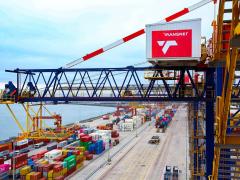
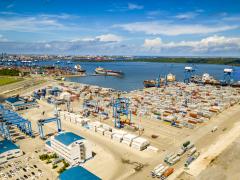
She said she would be visiting the Port of Durban this week to check on progress regarding EU investments in the port’s expansion programme.
EU Ambassador Sandra Kramer said EU and related loan facilities granted to Transnet had come with “very concessional conditions”.
Vitcheva will also advance South African participation in the OceanEye global ocean-observation alliance. The initiative is a 2026 EU project designed to strengthen ocean observation, digital twin technology, and marine data collection, backed by €50 million from Horizon Europe. It aims to protect marine ecosystems, boost the blue economy, and improve climate change monitoring.
"Our OceanEye initiative also strives to get an international alliance in order to have a global ocean observing system that is sustainable from a financial point of view, that is equitable, and that bridges the knowledge gaps and actually supports oceans,” she said.
“We know very little about the ocean. As the famous quote goes, we know much more about the surface of the moon than about the depth of the ocean. There is so much to explore.”
She said closing this knowledge gap was key to growing our ability to unlock the blue economy’s full promise – from untapped medicinal compounds in marine life and novel biofuels derived from algae, to wave and tidal energy, blue carbon sequestration, and sustainable aquaculture.
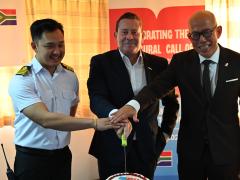
The three-day summit, hosted by Ocean Innovation Africa and eThekwini Municipality, focuses on regenerative blue business models, blue finance and pan-African innovation. It has drawn 500 delegates from across Africa and Europe. Last year’s Dar es Salaam event drew 593 delegates from 59 countries.
The event runs until March 25.