The Bureau for Economic Research (BER) at Stellenbosch University has modelled three distinct scenarios for South Africa’s economy between 2026 and 2030, using bird metaphors to illustrate the stark choices facing policymakers.
Titled Pick a Bird. Any Bird. Scenarios for the South African Economy: 2026-2030, the report warns that growth remains fragile despite improved fiscal discipline and early structural reforms, leaving the country vulnerable to external shocks such as the ongoing Middle East conflict.
“Our key finding is that South Africa can create an additional 2.4 million jobs by 2030 relative to 2025,” the BER states. “But as we have only a narrow window of opportunity in which to act, we need to focus sharply on a single, simple vision for the economy.”
The three scenarios are:
• Hadeda (Muddling Through): Partial reform delivers 1% to 1.7% annual GDP growth and 1.4m new jobs by 2030. Stability holds but investment stays skittish and structural constraints persist.
• Marabou Stork (Low Road): Reform failure combined with shocks see growth slip below 0.5%, only 450 000 new jobs, rising poverty and deepening fiscal stress.
• African Fish Eagle (High Road): Fast, credible reform drives sustained growth above 3%, delivering 2.4m additional jobs, falling poverty and a stable reformist centre.
The high-road Fish Eagle scenario targets the government’s implicit goals: 3% GDP growth, a 3% budget deficit and 3% inflation within three years.
According to the BER, success hinges on fixing the basics fast.
“We can achieve 3% growth by fixing the basics fast. Operation Vulindlela (OV) is addressing the binding constraints that delay investment decisions, but pace is everything,” the report noted.
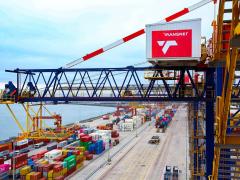
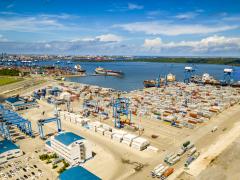
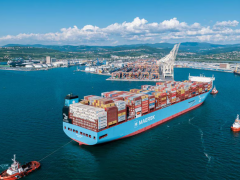
“Electricity distribution is a new crisis frontline, while inadequate and dilapidated infrastructure at ports and freight rail corridors remains a barrier to exports. Fixing these is South Africa’s highest-impact growth lever, though the fresh crises in water and criminal justice are fast becoming the country’s most urgent priorities.”
The report lists ten confidence-boosting interventions, including criminal justice reform – starting with full operational independence for the National Prosecuting Authority – public sector professionalisation, procurement transparency, budget redirection of R100 billion annually and SOE reform through “strong, independent and accountable boards to SOEs”.
It draws lessons from global coalition experiences, warning of coalition fracture, reform fatigue and external shocks.
“Reform sequencing matters: infrastructure first, labour last. Successful reformers start with high-visibility, broadly beneficial reforms that build political capital and defer the most politically divisive changes until a growth dividend materialises,” the report noted.
The Fish Eagle path requires accelerated Transnet turnaround, port and rail corridor upgrades and public-private partnerships to unlock export competitiveness and reverse the capital stock erosion seen in the Marabou scenario.
In the Hadeda baseline, growth settles near 1.7% – similar to the BER’s long-term forecast and only marginally better than the National Treasury’s 2% projection – delivering insufficient dent in unemployment.
The report concludes that the difference between scenarios rests on domestic delivery.
“In the end, the difference between the Hadeda, the Marabou and the Fish Eagle is SA’s ability to deliver on its own reforms and a function of how well the state and private sector partner to execute a shared plan to grow South Africa,” the BER noted.
“The binding constraint is domestic: whether the country can build its capital stock, restore the rule of law, maintain credible institutions and connect to the world economy through a cost-effective national logistics system that boosts exports. The window to lock in the African Fish Eagle scenario is open, but narrow. Implementation speed, not policy intent, will determine which scenario prevails.”
Access the report here.