South Africa's automotive supply chains are adapting to a structural shift in export markets as demand moves away from internal combustion engine (ICE) vehicles towards electric, hybrid and hydrogen-powered alternatives.
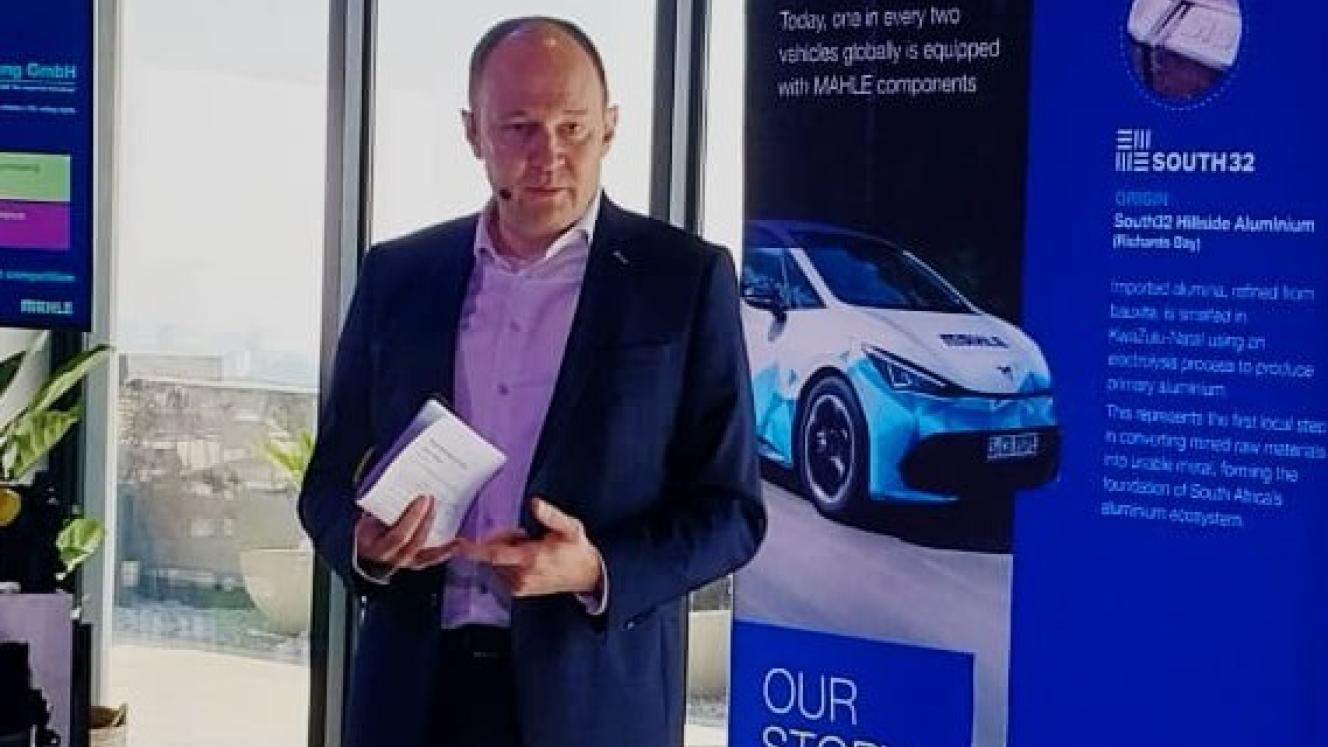
Speaking at MAHLE Thermal and Fluid Systems South Africa’s Media Tech Day on June 3, managing director Jürgen Wolf said the country’s automotive industry, historically built around ICE vehicle production, was approaching a turning point as global markets increasingly adopted new energy vehicles (NEVs).
South Africa remains an important vehicle manufacturing base but rising vehicle imports from China and India, combined with declining local content levels, were placing pressure on domestic manufacturers, Wolf said.
Local production had stagnated in recent years, he said, adding that future export competitiveness would depend on how quickly the industry adapted to changing international demand.
The shift is already influencing automotive supply chains. MAHLE currently exports around half of its locally manufactured components, including heat exchangers and welded tubes, to customers in Europe, the United States, Mexico and Asia.
“Maintaining and expanding these export channels will be critical as OEM demand evolves,” Wolf said. The company is also broadening its South African product portfolio beyond traditional ICE components to include products such as air cleaners, oil modules and acoustic covers, reflecting changing requirements in global vehicle markets.
The future of mobility was unlikely to be dominated by a single technology, Marco Warth, vice president of corporate research and advanced engineering at MAHLE Group, said. Instead, he expects a multi-path transition involving ICE, hybrid, battery-electric and hydrogen-powered vehicles, each creating different manufacturing, supply chain and infrastructure requirements.
For freight operators, total cost of ownership, particularly energy costs, would play a significant role in determining which technologies gained traction in commercial transport and logistics applications, Wrath said.
South Africa's Automotive Production and Development Programme (APDP2) has been amended to include electric vehicle components, while government has introduced a 150% tax deduction for qualifying investment in electric and hydrogen vehicle production. However, Wolf cautioned that the pace of adoption across trucks, buses and logistics fleets would depend on infrastructure readiness, cost competitiveness and supply-chain stability.