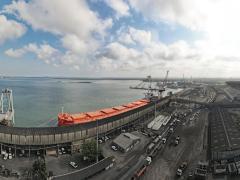
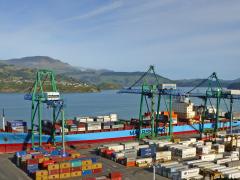
THE ANGOLAN port system is somewhat of a disaster area for shipping lines – with on-going congestion, high container damage rates, missing boxes and lines having to bear the cost of returning empties. “It’s a very costly market to service,” said Andrew Thomas, CEO of Ocean Africa Container Lines (OACL). But demand outstrips supply on the SA-Angola trade, he added, and seafreight is the only feasible mode for transporting the fast-increasing import needs of the country. The main port of Luanda still suffers from significant congestion, but Thomas noted that since A P Moller Terminals had taken over one of the terminals in the port, there had been “some improvement”. However there’s still some way to go before the anything up to 30-day delays at the port can be overcome, and a port congestion surcharge is still levied by the lines calling at the port. Not that it’s money in the bank for the lines, according to Thomas. Based on an OACL calculation, a 30-day delay at Luanda costs about US$800/teu, and the surcharge only renders US$400/teu. With this sort of delay, the line also reckons that it loses about 20-25% of its annual voyage time on the Luanda run. Lobito used to be a good alternative, but it has also begun suffering from bad log-jams in the past eight months, according to Thomas. Another worrisome concern for lines serving Angola is container damage risk. “It’s still at a very high level,” Thomas said, “due to inadequate handling equipment at the ports.” There’s also the problem of missing boxes. “They use our containers as longterm storage units,” Thomas said, “and we have to search them out.” Added to that is the one-way nature of the trade. “With no containerised exports from Angola,” Thomas said, “the lines have to take up the cost of returning empties.”
Angolan port log-jams drain carriers’ profits
Comments | 0
© Now Media. This content is protected by copyright and may not be adapted or republished. If you would like to discuss cooperation opportunities, please contact: editor@freightnews.co.za.