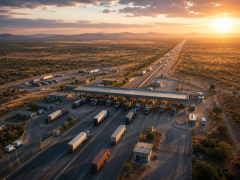
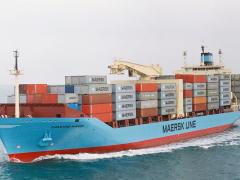
South African freight operators have set their sights on growth opportunities in Zambia and its neighbours. In 2014, according to the United Nations Department of Economic and Social Affairs, African economies should see average growth of 4.7%, compared to 1.5% in Western Europe or Japan, and 2.5% in the USA. The World Bank forecasts 2% growth for South Africa. Up to 80% of all goods within Africa are carried by road. “It’s not rocket science. South African companies looking to expand should be taking advantage of booming African development,” says Andre Jansen van Vuuren, divisional marketing director of Cargo Carriers. “Especially when you consider that many African contracts are dollar-based – providing a valuable currency hedge,” he adds. In July 2012 Cargo Carriers acquired a 55% stake in Zambian haulage company BHL in order to expand its footprint in Zambia, Namibia, the DRC and Angola. “Having a local operation, someone who understands the lie of the land better than we do, is vitally important,” says Van Vuuren. “Local knowledge makes it easier, and as a springboard into Africa it was definitely a good move.” Initially focused on the mining industry, BHL is successfully expanding into the manufacturing and agricultural sectors. Cargo Carriers assisted BHL in increasing its fleet from 75 to 126 trucks – giving it 60% more capacity. Both parent company and subsidiary are confident of long-term returns. Road transport is keeping the wheels of the growing African economies turning. Despite accelerating upgrades, the rail infrastructure is not able to handle the volumes of freight being moved in and out of ports, as well as cross border, he says. Africa’s road network presents its own unique challenges. “Lowering these risks,” Van Vuuren says, “was one of the reasons Cargo Carriers opted for co-ownership with a local partner rather than trying to open a new division on their own”. The variable quality of African roads and the vast distances between maintenance facilities, also have to be taken into account. Buks van Rensburg, founder and now co-owner of BHL, considered it a priority when their fleet was upgraded in 2012. “Your trucks need to be tough enough to handle bad road conditions, but you don’t want something too complicated either. The reason we elected to buy FAW trucks direct-fromsource in China was that they’re actually less sophisticated than trucks we could have bought from Europe. “The problem there is that they have such sophisticated computer diagnostics built in. If anything goes wrong, you need to call in an expert to service them – and the truck stands idle while you wait. “The FAW trucks aren’t as dependent on complex electronics, so we are able to service and maintain them in our own workshops and minimise downtime on each vehicle. Not only are we saving 8% in fuel costs, but we’re also running at over 90% utilisation – compared to our 65% utilisation on ‘more sophisticated’ European vehicles. It all adds up to reduced costs that we can pass on to clients.” Reducing fuel costs, turnaround times and downtime all help reduce costs, but sustainable penetration into Africa also requires constant innovation. A tipper/tanker configuration built to Van Rensburg’s design allows BHL trailers to carry bulk and liquid cargo simultaneously or on alternate trips. This means that BHL can carry copper concentrate via tipper from mine to smelter, for example, and then return with a tanker full of sulphuric acid for the mine. The tippers can also be swapped for container trailers. BHL is continuing to grow. “We’re receiving enquiries from existing customers in South Africa,” van Vuuren says. “So the market is definitely there, and it’s growing – especially in SADC and East Africa.” INSERT & CAPTION Having a local operation, someone who understands the lie of the land better than we do, is vitally important. – Andre Jansen van Vuuren CAPTION Initially focused on the mining industry, BHL is successfully expanding into the manufacturing and agricultural sectors.
African boom brings expansion opportunities in transport sector
Comments | 0
© Now Media. This content is protected by copyright and may not be adapted or republished. If you would like to discuss cooperation opportunities, please contact: editor@freightnews.co.za.