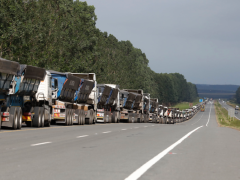
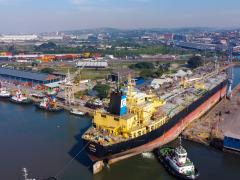
Abnormal truck operators have voiced their objection to the manner in which Transnet Port Terminals (TPT) at the Port of Durban imposes penalties on abnormal vehicles failing to leave its port premises within four hours. This, according to Carl Webb, MD of Project Logistics Management (PLM) and representative of the SA Association of Freight Forwarders (Saaff) on abnormal cartage at the port, relates to vehicles that are directly loaded from ships. This situation is where no TPT equipment needs to be involved, because the ships directly discharge the abnormal cargo straight onto the haulier’s trailer. But then that four hour ruling comes into play. “This,” said Webb, “is complicated by the fact that, under the Road Traffic Act, abnormals are only allowed to move during daylight hours. And often, late-in-the-day loading may cause them to have to wait until the following morning before being allowed to move.” But, because they are not legally allowed to turn a wheel outside the port gate, and TPT has refused to provide adequate parking for abnormal vehicles having to wait until police escorts arrive, the truckers are caught in a traditional Catch 22 bind. There is nowhere for them to legally go. Although the only answer is for them to park off outside the terminal wherever they can find space, Webb said this was a costly pursuit as the Durban Metro Police found it a good revenue earner by sitting just outside the gate waiting for the transgressors. But, if they are not out of the gate in four hours, TPT hits them with what Webb described as “its own rather weird interpretation” of the application of the national landing fee. “Most transporters aim for offloading direct onto the trailer as it is only charged at 50% of the tariff rate,” he added. “But, if you fail the fourhour test, TPT hits you with an invoice for the indirect landing fee – charged at the full rate – regardless of whether it was indirect or not.” What TPT is doing, according to Webb, is using the terminal operating guidelines (TOG) as a penalty – in contravention of the tariff. “And the tariff,” he said, “is a promulgated document. It clearly defines what is direct and what is indirect landing and the fees for each. TPT can’t just choose which one they want to apply.” In Richards Bay and Cape Town, just like all the world’s main abnormal terminals, the port operator (in SA’s case TPT) has parking facilities for vehicles awaiting an escort. INSERT & CAPTION Most transporters aim for offloading direct onto the trailer as it is only charged at 50% of the tariff rate. – Carl Webb
Abnormal truckers object to 'unfair' TPT penalty
Comments | 0
© Now Media. This content is protected by copyright and may not be adapted or republished. If you would like to discuss cooperation opportunities, please contact: editor@freightnews.co.za.