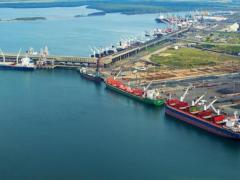
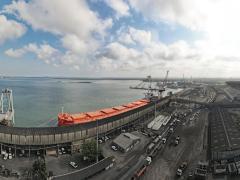
Alan Peat THE CONGESTION curse is about to blight the port of Cape Town, according to senior members of the port user community. Ships are now dotting Table Bay, parked off-shore awaiting entry to their berths. And certain liner vessels, according to a shipping line executive, are now registering delays of up to 50 hours before they can access the container quays. "Some ships are having to cut-and-run, because they just don't have enough time in their schedules," another line manager told FTW. It's also congestion looming right at the peak of Cape Town's fruit export season, according to a major in the reefer industry. "Portnet just didn't expand the reefer stacks in time," he told FTW, "and we are now paying the price with serious delays." And any excuses about wind delays just don't hold water, our commentators told us. "I have just done my figures," said one, "and wind delays this season are a lot less than other seasons." The reason, according to a liner operator, is a simple one. "They just don't have sufficient manpower," he said. This is confirmation of the warning that Colin Schultz, distribution manager for SANS Fibres - one of the Cape's major exporters - raised with FTW three weeks ago (See "CT fears congestion surcharge bogey" in FTW February 22 issue). This because the port was even then operating close to capacity. "The harbour here normally handles about 30 000 containers a month," Schultz told FTW. "But they've been operating at about 37 000 containers recently and getting close to their 40 000 unit capacity limit." Albert Schuitmaker, c.e.o. of the Cape Chamber, and a founder of the Port Liaison Forum (PLF), agreed. "With an increased throughput at the port of 23%," he told FTW, "there is serious congestion looming." But this is not the time for finger pointing and laying blame, Schuitmaker added, but rather for searching for solutions. "To prevent it turning ugly the PLF has created a work group, first to come up with short-term solutions. "Then we will also examine medium- and long-term solutions so it doesn't happen in the future." There will be weekly meetings of this group to monitor the situation, Schuitmaker added, and to take action where it is possible. "All stakeholders need to pull in the same direction."
Work group addresses looming CT congestion
Comments | 0
© Now Media. This content is protected by copyright and may not be adapted or republished. If you would like to discuss cooperation opportunities, please contact: editor@freightnews.co.za.