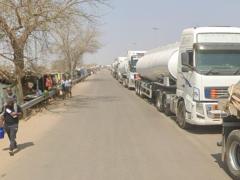
FTW: What is the financial impact of the logistics bottlenecks on the industry? Cobus Rossouw, Imperial Logistics: Fundamentally, logistics is about getting the right product to the right place at the right time. Bottlenecks slow down the logistics system, which results in low product availability, wasted activity and less agility. All of these drive up costs and compromise the end-beneficiaries – who are the customers and consumers. Gavin Kelly, Road Freight Association: The longer goods take to clear/ move/process through any leg of the logistical chain – the more chance there is for a cost increase. It is common knowledge that trucks generate income for their owners when they move, so wheels that stand still will cost money and this will need to be recovered somewhere – the next load perhaps – but definitely in the long-term rate increase for transport. Peter Kilbourne, University of Johannesburg: Any logistics constraint imposes a burden on efficiency and effectiveness in the economy on a macro as well as micro level. It therefore negatively affects everyone in society. One can only guess about the real cost of the constraints but it should be high. Based on the CSIR’s State of Logistics report, total domestic logistics costs amounted to R339billion or 12.7% of GDP in 2010. A 1% reduction in costs can therefore save the country R3.39 billion. The uncontrollable part of logistics costs is worrying. As we all know, the biggest driver of logistics costs in the country’s logistics system is transportation (more specifically road transport). Fuel costs (the most significant element of road transportation costs) are determined by crude oil prices and exchange rates, which fall outside the direct control of the logistics industry. Crude oil prices have an elastic relationship with global economic growth and together with an unstable local currency, have the potential to drive transportation costs upwards very quickly. It also complicates planning. Due to the country’s high reliance on road transport, a major cost increase will have a very negative effect on inflation as well as the competitiveness of the economy. FTW: What is the impact on operations? CR: To compensate for bottlenecks, operations add buffers to the system. Lead-times are extended to allow for unforeseen disruptions, inventory is increased to protect against out-of-stocks, and costs are incurred to build in redundancy. All these precautions slow down operations and limit the ability to drive continuous improvement. GK: Depending on the duration of the delay – and the length of the overall trip – an operator can experience penalties for late delivery, non-delivery or even have contracts cancelled due to “poor performance” and “contract breach”. Most cross- border operators will schedule return loads if there is no return on the inward leg. This is then lost (and perhaps future work as well) and the operator then travels at a loss or spends time trying to find a return load. Costs increase on operations. FTW: What in your opinion needs to happen to address this situation? CR: We need a sense of urgency to address bottlenecks. Far too often, logistics and operations people have become so used to bottlenecks, that they just accept their existence. We need to quantify the cost associated with bottlenecks and work with all stakeholders to systematically remove them. Without this, we can never become globally competitive. GK: Bottlenecks can either be created due to inefficiencies or to regulatory practices. These need to be identified first and then solutions to these found. Some may be simple (new equipment or procedures) whilst others may be more complicated (attitudes and approach). PK: On micro level, firms will have to pay special attention to supply chain design, cost tradeoffs, skills development, and risk management. The spatial positioning of facilities will become more important than before because of their impact on transportation requirements. Management will have to constantly revisit their evaluations of the relationships between their logistics cost drivers. Because of high transportation costs, increased inventory holding costs may become a more regularly used instrument towards reduced total logistics costs. Timely and accurate information about cost drivers will be vital for decision-making and will probably create more opportunities for business analysts and those providing the tools for it. INSERT R3.39bn What a 1% reduction in logistics costs could save the country in a year. INSERTS & CAPTIONS Wheels that stand still will cost money and this will need to be recovered in the long-term rate increase for transport. – Gavin Kelly Logistics and operations people have become so used to bottlenecks that they just accept their existence. – Cobus Rossouw Any logistics constraint imposes a burden on efficiency and effectiveness in the economy. – Peter Kilbourne
‘We need a sense of urgency to address bottlenecks'
Comments | 0
© Now Media. This content is protected by copyright and may not be adapted or republished. If you would like to discuss cooperation opportunities, please contact: editor@freightnews.co.za.