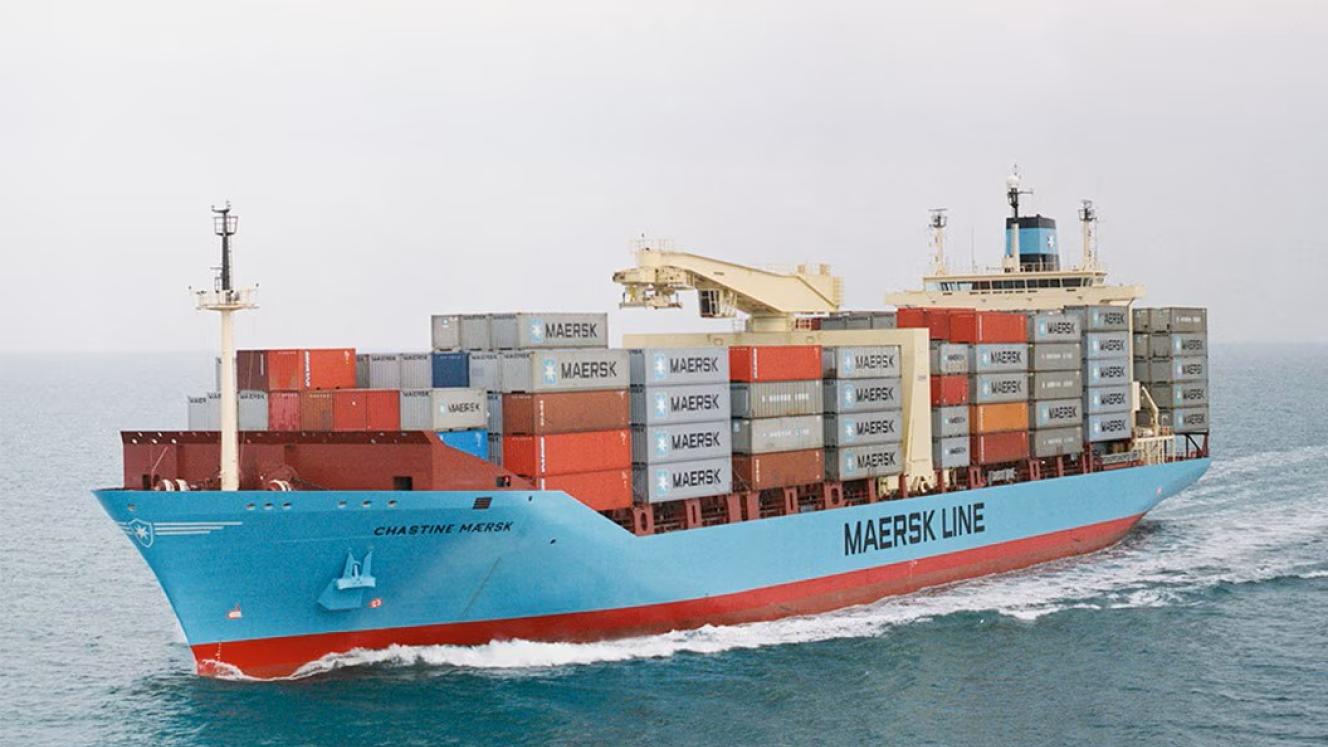
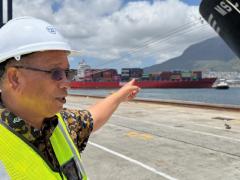
Side-stepping the low blow that has floored most of the global automotive industry, Volvo Truck Industries’ MD Glen Owen told FTW that his company “is still going forward”. “The incoming volumes of completely knockeddown (CKD) vehicle components are still the same for the moment,” he added, “although we live in an environment which is changing daily.” In the triumvirate of companies that handle the SA supply chain and streamline the delivery of component imports to the truckmaker’s front door on a just in-time (JIT) basis, shipping matters are managed by ship’s agency, Mitchell Cotts Maritime, while the landside road transport leg from portto- plant is run by SA Inland Logistics (Sail). The dedicated truck fleet – specialising in maintaining the Volvo delivery schedule – is still running to budgeted capacity, according to Sail’s MD, Roland Naidoo. “Our shipping consignments are still as frequent,” he told FTW, “and the volumes for our transport fleet are constant.” The three companies form an excellent working team, according to Sunny Naidoo, freight manager of Mitchell Cotts. “The added-value to the service,” he said, “is generated by constant communication and detailed delivery planning.” The smooth flow of container-loads of truck parts is maintained by daily e-mail throughout the month. “Our basic function is to move each week’s batch of 12-metre containers loaded with vehicle components directly from the ship’s side at the Port of Durban to the Volvo Truck assembly plant at Amanzimtoti,” said Naidoo of Sail. But it’s considerably more complex than just simply trucking containers. “These are imported on a strictly JIT delivery schedule – and have to arrive at the start of the assembly line exactly on time for Volvo to maintain a constant production flow,” Naidoo added. The only disruptive element to the scheduled road transport leg of the supply chain, according to Owen, is one of those out-ofcontrol factors. “Those regular snarl-ups on the Bayhead Road ,” he said, “are now predictably frequent on the ONLY road access to the port container terminal area in Durban.” But the constant communication between the three companies helps to overcome such niggling breakdowns in the delivery chain.
Volvo volumes holding their own for now
Comments | 0
© Now Media. This content is protected by copyright and may not be adapted or republished. If you would like to discuss cooperation opportunities, please contact: editor@freightnews.co.za.