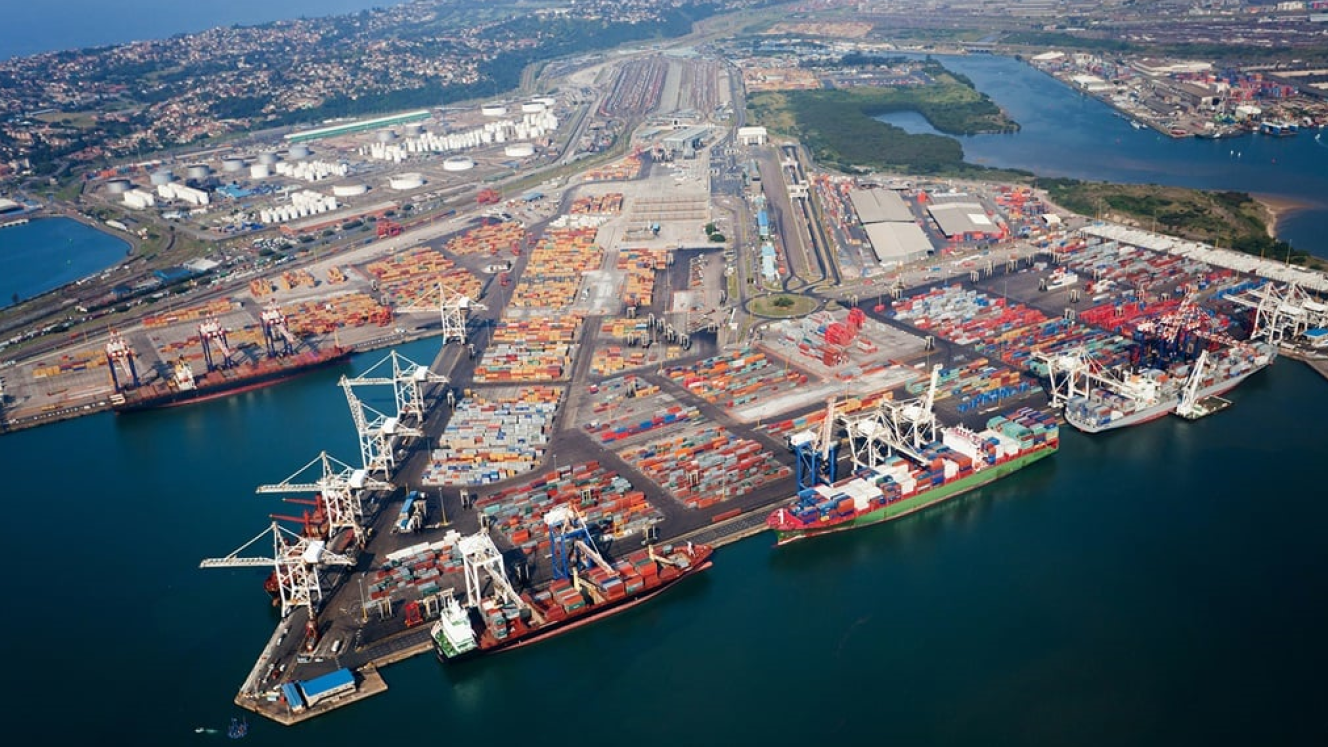
Truckers operating in the Port of Durban are losing more money now than during the Transnet strike thanks to protracted delays of 12-18 hours to turn trucks around. That was the message from the Durban Harbour Carriers’ Association (DHCA) to senior management at the Durban container terminal (DCT) and Pier 1 during an urgently convened meeting last week. Even after the strike, the transporters described the service levels as “appalling” and insisted that the public and the private sector must work together if an answer is to be found. The meeting was to look for solutions without the usual accompaniment of stone-throwing, according to Kevin Martin, MD of Freightliner Transport and chairman of the DHCA – a division of the SA Association of Freight Forwarders (Saaff). “We told them that unless we could get a better level of service we would be left with no other alternative but to park off our vehicles until this could be provided.” The DHCA noted that the terminals: • Had slowed down waterside service slightly – to achieve a better balance: • Appointed a “landside manager” purely to look after road transport; • Started staging trucks in import and export rows for each tower – sending trucks down in pigeon pairs to the tower, allowing tower machines to run loaded both ways, and achieve better utilisation of equipment and better service; • Appointed staff to control free storage/late arrivals for June only. Martin said: “Please note this is not a blanket freebie but on a case-by-case basis. All members are under the whip to meet deadlines – but do NOT abuse or be selfish.” Implementation of the new Navis port control system has meantime been postponed to year end/early next year at DCT. At the meeting the DHCA agreed that what they would do to assist was: • If possible, try to remove an import with every export delivered, to create space in terminal; • Discipline drivers to stand in the correct rows in the staging areas to assist the “pigeon pairing” despatch to towers; • Discipline drivers to adhere to a first-in, first-out system in the holding areas; • Discipline drivers to remain with the vehicle. Often a row cannot be opened because the driver of the front vehicle is not on the truck. This inconveniences all the trucks parked behind him; • Discipline drivers, if going to DCT, to keep in the left lane in Langeberg Road, because blocking the right hand lane means that traffic to Pier 1 and Island View Storage (IVS) cannot get through; • Use off-peak periods if possible; • Get clients to work longer hours, with smaller more frequent shipments, to spread the workload; • Be sensible when accepting the work, and factor in slower turnaround times. Not blame poor terminal service for what is, in fact, bad planning on the trucker’s part. “The bottom-line,” said Martin, “is we are all in for some tough times ahead due to the backlog – which, if the shipping lines hadn’t halted or slowed down collecting cargo for SA even before the strike started, would have been even more horrendous. “We as an industry – both transport and clearing and forwarding (C&F) – need to do the same. That is turn down or slow down work and spread it better. “It’s not going to be as good as it should be for a month, or maybe two,” he told FTW.
Truckers and port jointly address ‘appalling’ delays
Comments | 0
© Now Media. This content is protected by copyright and may not be adapted or republished. If you would like to discuss cooperation opportunities, please contact: editor@freightnews.co.za.