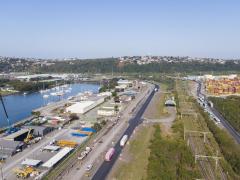
TRAFFIC CONGESTION in Gauteng has reached the stage where it inhibits economic growth due to loss of productivity while simultaneously damaging the environment through excessive emissions. The good news is that construction has started on the first phase of the Gauteng Freeway Improvement Project (GFIP). Although disruption to traffic is to be expected during the construction phase, the South African National Roads Agency (Sanral) points out that the long-term benefits will more than compensate for the temporary inconvenience of construction activities. The cause of the problems is simple – urban development happened at a far quicker pace than the upgrade of the road infrastructure. The delay is partly due to the change in government but can be ascribed chiefly to the fact that urban development is a private sector initiative while road infrastructure is a public sector enterprise and the wheels in the private sector in general turn much faster due to the profit motive involved. This has placed a tremendous strain on the existing road network as development has run out of phase; in a perfect world the upgrading of the roads would have preceded the massive urban development that has taken place in Gauteng over the past few decades. A consulting engineer for the GFIP notes that the rush to implement the project along with the Gautrain project before the commencement of the 2010 World Cup has placed a tremendous strain on resources. Five years ago most professionals in the construction industry were twiddling their thumbs waiting for work and now everything needs to happen at the same time. “All of these projects should have been phased in years ago and should not have waited for the 2010 injection,” he says. What does GFIP entail? GFIP involves the provision of additional lanes, interchange improvements and intelligent transport management systems, including cameras, ramp metering and electronic signage on Gauteng’s freeways. All interchanges will be upgraded to system interchanges which consist of loops without stop streets and traffic lights to ensure a free-flow of traffic. In addition, concrete surfaces will be covered by an asphalt layer to reduce traffic noise for the benefit of communities living in close proximity to the freeways. To promote the use of public transport the roads will include high occupancy vehicle lanes which can be integrated with bus rapid transport systems, taxi, bus and train routes. Construction for the upgrade of the N1 between the R21 interchange and Atterbury Interchange, east of Pretoria, is already well under way while upgrading of the following 125.5 km of freeway sections will take place over the next 36 months: N1 from Soweto to the N4 in Pretoria; N3 from Alberton to Buccleuch; Sections of the N12 south of Johannesburg as well as the N12 from Gilloolys to the R21 to Boksburg. The construction has been prioritised to be substantially completed for the 2010 World Cup. In order not to disrupt the flow of traffic during the World Cup a temporary suspension period has been programmed from May 28 to July 14, 2010 and it is estimated that it will take a further four to five months to complete the project after that. Economic benefits According to Sanral, the project will contribute R6.3 billion to the Gauteng Gross Geographic Product for 2008 and R6.7 billion in 2009 as well as R14.2 billion to South Africa’s gross domestic product (GDP) in 2008 and R15.3 billion in 2009.
Traffic will get worse before it gets better
Comments | 0
© Now Media. This content is protected by copyright and may not be adapted or republished. If you would like to discuss cooperation opportunities, please contact: editor@freightnews.co.za.