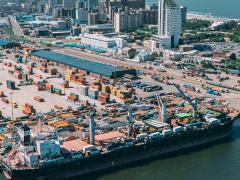
Transnet Port Terminals is
motivating staff to innovate
and ‘disrupt’ its traditional
operations to improve
production efficiencies and
reduce costs as part of the soft
infrastructure investment of its
R300-billion Market Demand
Strategy (MDS).
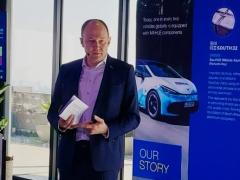
Transnet Port Terminals
CEO Karl Socikwa told
delegates at the African
Ports Evolution conference in
Durban last week that apart
from investing extensively in
replacing ageing infrastructure
and expansion it was making
an “extensive investment”
in soft assets to address
inefficiencies and enhance
synergies between its rail, port
and other divisions.
“We are starting to look at
how we can disrupt the way
we have done things in the
past. We need to think how
do we do things better and
how do we do things smarter,
not just throwing money at
this problem, but being more
innovative,” he said.
“Innovation is one of the
values we have embraced and
each of our general managers,
for example, is incentivised
to constantly come up with
innovative ways of doing things
and disrupting how they have
been doing things in the past.
This has generated a lot of
frenzy and excitement in the
business and we are starting
to see some pleasing results,”
he said.
One innovation was to
set the idling time for diesel
engines with electronic control
units to shut down after five
minutes of continuous idling,
translating into a projected
R3-million saving per annum.
What started as a tyre glove
project for 124 straddle
carriers to protect the tyre wall
against damage and reduce
tyre replacement, became a
tyre management project,
resulting in a drastic drop in
damaged tyres with a projected
R14m total saving across all
terminals.
Socikwa said its transit
value chain project, which
focused on priority export
commodities such as iron ore,
manganese, coal, chrome,
containers and automobiles
had produced results. A
team of staff from across
port, rail and other operating
divisions had interrogated the
operating methodology within
each supply chain corridor
to eliminate inefficiencies.
Improvements included
aligning shift patterns between
rail and port divisions to work
smarter, he said.
Socikwa said the
business was innovating
communications with clients
and stakeholders via its mobile
app, which kept users updated
regarding terminal activity.
However, he said improved
efficiency had to translate into
reduced supply chain costs.
“People like to talk about
port costs – terminal handling
charges – but there is a total
supply chain cost driven by the
level of partnering in the supply
chain,” he said.
Socikwa added that shipping
lines were focused not on the
unit cost of port cargo handling
but on the total economic cost
of visiting the country as a port
destination.
According to a World
Bank report SA port charges
contributed about 15% of total
transport supply chain charges
compared to the global average
of 27.7%, he said.
Socikwa said the port was
working intensively on preplanning
with customers to
reduce costs and
ensure vessels
docked and
sailed on
schedule,
with
penalties
incurred for
delays.
INSERT & CAPTION
TPT aiming to get
the port to a level
comparable with or
better than ports
like Rotterdam and
Singapore.
– Karl Socikwa
TPT opts for ‘disruptive’ strategy
Comments | 0
© Now Media. This content is protected by copyright and may not be adapted or republished. If you would like to discuss cooperation opportunities, please contact: editor@freightnews.co.za.