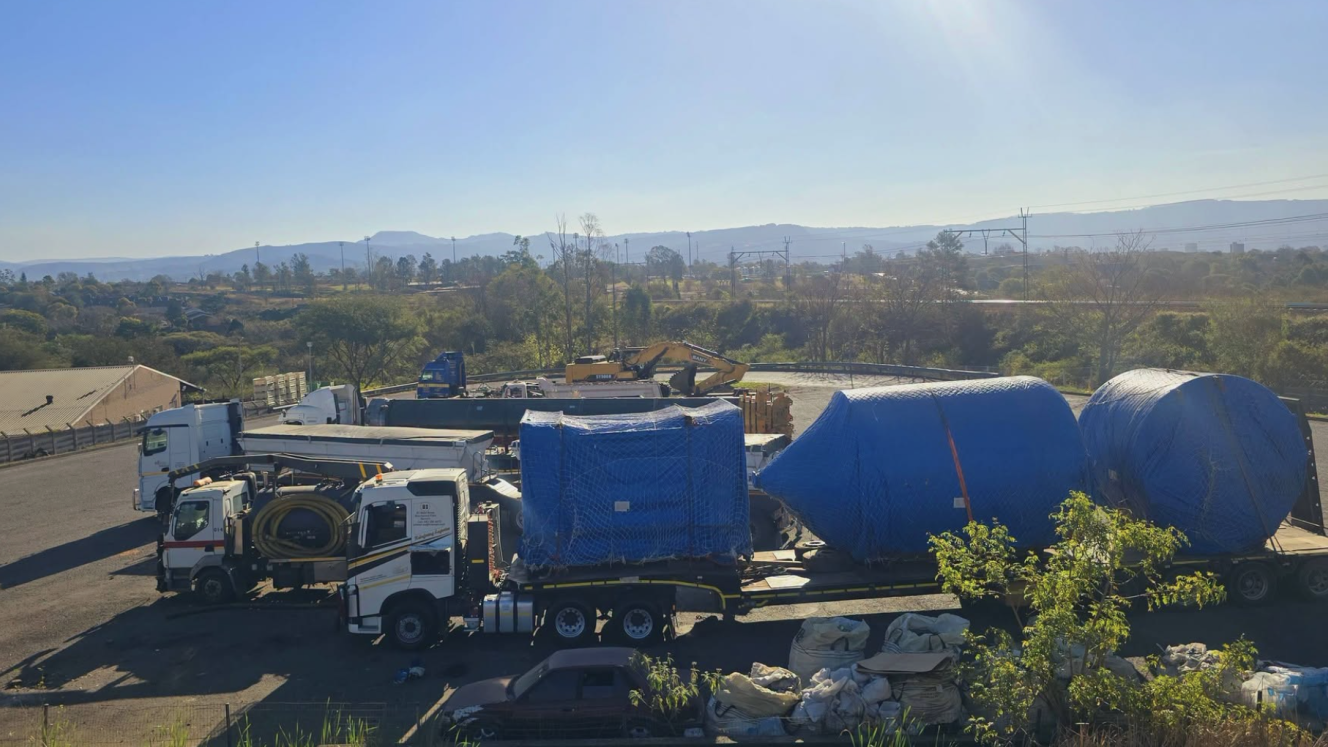
Infrastructure spending by Transnet Port Terminals (TPT) is starting to accelerate, with the operational capital for 2015/2016 set to reach R2.7 billion – 80% more than the current financial year, according to CE, Karl Socikwa. Speaking to FTW at last week’s African Ports Evolution Conference, he said that TPT was gearing up for another busy period in the next two financial years. After expenditure of R1.6bn in the last financial year, spending is set to rise to R6.0bn in 2018/2019. What he termed “aggressive investment” is designed to boost capacity ahead of demand. “Our terminal infrastructure upgrade programme has reached a critical stage – with TPT expecting to see rapid capacity increase in the years ahead,” Socikwa added. And this is due to come from TPT’s share of Transnet’s total R300bn, seven-year infrastructure programme. This designed to modernise the country’s port, rail and pipeline infrastructure. TPT has got a cut of just over 10% of the total, with an overall spend of about R33bn. This, according to Socikwa, is aimed at refurbishing TPT’s operations in Durban and Richards Bay in Kwa-Zulu Natal; East London, Port Elizabeth and Ngqura in the Eastern Cape; and Saldanha and Cape Town in the Western Cape. And, over the next two financial years, he added, the container terminals at Durban Pier 1 and 2, Port Elizabeth, Ngqura and Cape Town will receive a total of R2.97bn for both equipment and infrastructure. All this will take TPT’s overall container terminal capacity from its current 4 million TEUs to 7m by 2019. Durban Looking at Durban, the country’s major port, Socikwa told FTW that Pier 2 was set to receive 15 twin-lift straddles as well as two rail-mounted gantries and two ship-to-shore (STS) cranes during this year. “We are now looking at extending the stacking area on the North Quay of Pier 2 by 50 metres,” said Socikwa. “Meanwhile, the South Quay is set for an upgrade to be completed in May next year, along with the full automation of the truck staging area. “The overall spend at Pier 2 will be R1.3bn, and will increase the terminal’s container handling capacity to 3.3m TEUs by 2017.” Interestingly, Socikwa assured FTW that the work on the Durban Container Terminal berths on Pier 2 would include their dredging down to 15m from their current 11.5m. “We’re planning around 2016/17 for the upgrading and deepening of the quays.” Pier 1 will see the mid-life refurbishment of 18 rubbertyred gantry (RTG) cranes, six ship-to-shore cranes as well as the delivery of two reach stackers over the next two years. Socikwa noted that Pier 1 would ramp up its handling capacity to 1.3m TEUs by 2016. He also revealed another bit of news to FTW about Pier 1. “Berths 101-103,” he said, “have not really been utilised up to now. But we’re looking at opening up these berths, and at the possibility of STS cranes and rail-mounted gantries.” His short- to medium-term planning, he told FTW, would see a capacity increase of 900 000 TEUs a year at the present port before the digout port starts operation. Ngqura The Eastern Cape is also not forgotten. Socikwa highlighted that the Ngqura Container Terminal (NCT) had taken delivery of new rubber-tyred gantries (RTG) and mobile harbour cranes in March this year as part of a R1.1bn investment. “This,” he said, “will see the terminal increase its handling capacity to 1 million TEUs in the current financial year – owing to the additional berth that is already in operation and complemented by the terminal’s new equipment which includes 48 haulers.” Port Elizabeth Still in the Eastern Cape, the Port Elizabeth terminal is set to take delivery of 10 straddle carriers and have quayside rail replaced. This is to be done over the next two years at a cost of R334m. Cape Town Meanwhile, the Cape Town Container Terminal expenditure of R115m in 2015/16 is part of the port’s R5.7bn infrastructure spend. A total that is directed towards new Panamax cranes, stackers, the second phase of the expansion project as well the resurfacing of the refrigerated container stack, set for completion by 2015/2016. “We have also made a significant investment in the facilities that handle mineral exports,” said Socikwa. Saldanha “At the Saldanha iron ore terminal, this includes installation of a new tippler worth R1.2bn, mid-life refurbishment of existing terminal equipment and conveyor belt replacement. Richards Bay “TPT’s Richards Bay Terminals will also see about R407m investments in the current financial year and R515m in 2015/2016 towards capacity creation projects and equipment. “A purchase of two additional grab unloaders is planned for 2016/2017. The construction of additional capacity worth R347m is already in progress, and due for completion next year. “Richards Bay will also, in the next five years, purchase a new tippler to add to the existing two.” INSERT & CAPTION Investment will take TPT’s overall container terminal capacity from its current 4m TEUs to 7m by 2019. – Karl Socikwa CAPTION Pier 2 set to receive 15 twin-lift straddles as well as two rail-mounted gantries and two shipto- shore (STS) cranes during this year. Photo: Shannon Van Zyl
TPT infrastructure spending accelerates
Comments | 0
© Now Media. This content is protected by copyright and may not be adapted or republished. If you would like to discuss cooperation opportunities, please contact: editor@freightnews.co.za.