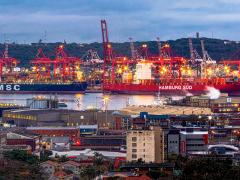
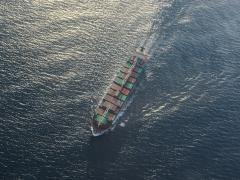
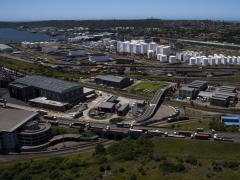
A highly contentious issue for SA shippers is likely to be eased before too long. The Transnet National Ports Authority (TNPA) is intending to shift the main burden of paying port charges from the cargo owner to a combination of the shipping lines and terminal operators. Under the current tariff structure, cargo owners are bearing 61% of the cost of port charges through cargo dues, while shipping lines and terminal operators share the remaining 39%. But, admitted the authority, the current split of the required revenue by port user group “cannot be soundly defended”, as it is not based on a clear allocation of assets. Other issues with the current split include: * Very high tariff levels for cargo dues resulting from the migration from the old wharfage charge, which was calculated on an ad-valorem basis depending on the value of the cargo; * Very high differentials in the levels of cargo dues for different cargo types and commodities with no clear motivation for the differences; * Relatively low tariff levels for maritime services, which are based on an activity-based costing exercise conducted during the tariff reform of 2002 and that has since not been updated, resulting in the subsidisation of some services, and; * Very low levels of revenue from the real estate business as compared to other landlord port authorities across the world. But the TNPA has adjusted its formula, which will shift this burden to its rightful recipients. The TNPA’s proposed required revenue – which, it says, is driven by asset allocation principles – results in the following contributions: cargo owners 46%, terminal operators 33%, and shipping lines 21% – an overall reversal of split to 46% cargo owners to 64% the rest. The authority told FTW that the proposed tariff structure means that terminal operators will pay higher rentals that are more in line with international norms; cargo owners will pay lower cargo dues, also more in line with international norms; and shipping lines will pay slightly higher tariffs. It also insisted that – based on the application of the design principles – the proposed tariff structure “presents the most balanced and defendable distribution” of required revenue across port user groups, while noting that the success of achieving the higher real estate revenue is critical for the successful implementation of the pricing methodology. The TNPA listed the principles and rules on which the proposed cargo dues tariff structure will be based: * There must be a clear rationale to justify overall cargo dues. In the proposed tariff structure, cargo dues pay for the provision of common wet and dry infrastructure and must recover the required revenues from this infrastructure; * There should be one base rate per each different cargo handling type (ie, containers, dry bulk, break bulk, liquid bulk, ro-ro), which should be determined based on the userpays principle; * Users of the common infrastructure are vessels; therefore usage by different vessel types for each cargohandling type seems the most appropriate way to determine the charges. To achieve this last condition, said the TNPA, the proposal is to determine the share of total cargo dues to be paid by each cargo-handling type through the count of vessel arrivals. For example, 44% of all relevant port calls are made by container vessels. Accordingly, 44% of the total cargo dues should be recovered by containers. While this welcome proposal for the shippers of this country may depend somewhat on the fate of the 2013/14 tariff application at the hands of the Ports Regulator, there is no doubt that it will meet with approval from cargo owners who have for years disputed what they felt was an unjustified burden. CAPTION In terms of the proposed new tariff, cargo owners will pay 46%, terminal operators 33%, and shipping lines 21%.
Tariff relief in sight for cargo owners
Comments | 0
© Now Media. This content is protected by copyright and may not be adapted or republished. If you would like to discuss cooperation opportunities, please contact: editor@freightnews.co.za.