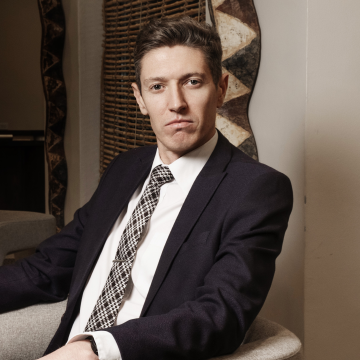
THERE’S NO T much question that hubbing ports and their related feeder services will remain an indispensable shipping service in Africa for a very long time to come. That much is clear from a conversation with Andrew Thomas, chief executive of Ocean Africa Container Lines – one of the best qualified people to talk about hubbing and feeder services. After all, 70% of the cargo on O ACL ships is made up of feeder traffic carried on behalf of other lines. He says OACL works for just about every liner service working South African ports, with the possible exception of one or two that do not accept cargo for outside Durban or Cape Town. Feeder volumes, he says, have increased year on year which can be seen by the increase in size of ships that O ACL now deploys. Today most of these ships are around 1100-TEUs, compared with 600-800TEUs of a few years ago. “It's interesting that today’s feeder ships are yesterday’s mother vessels. In SE Asia feeder vessels average 3000-TEUs – that’s how the trend is going. And as even larger mother ships are introduced the need for feedering grows. You can definitely say that feeding and hubbing is here to stay.” Thomas says that it requires more ingenuity to operate a feeder service in Africa than in SE Asia, where things run like clockwork. “Africa is different,” he says wryly, “which is why we have to work closely with the ports and the other shipping lines. “At O ACL I believe we have some of the best operators on the coast, of that I have no doubt.” But, he points out, the services at African ports are not generally efficient. “Congestion remains a major problem, and here I’m not hitting out at S outh African ports. In Luanda our ships can wait an average of 25 days for a berth, then take another five days in port to discharge. That’s 30 days spent on this one call – we could run a full service with just three ships in 21 days but because of this we need five. O ver the other side in Beira it’s a different challenge – the draught restriction. Any delays along the way mean that by the time we reach Beira the tide is different from what was planned, therefore a further delay, and at Dar es S alaam we have congestion delays.” “But there’s a symbiosis between us and all these ports, which is why we work together. N evertheless there is congestion in the network and we have to work around this. Dialogue in S outhern Africa through the various forums is very necessary in addressing these problems.”
Streamlined connections demand co-operation with ports and carriers
Comments | 0
© Now Media. This content is protected by copyright and may not be adapted or republished. If you would like to discuss cooperation opportunities, please contact: editor@freightnews.co.za.