Costs for shippers at the Port of Cape Town are mounting as authorities fail to adequately address ongoing congestion concerns. This was the feedback at a recent meeting of the Cape Port Liaison Forum (PLF), an initiative of the Cape Chamber of Commerce and Industry, where the problems being experienced in Cape Town now top the agenda. PLF chairman Mike Walwyn said while there had been significant improvement in Durban following last year’s storm damage, Cape Town remained under pressure and this was now seriously impacting industry.
The windy season – traditionally between November and March – has exacerbated the situation, along with equipment challenges in the terminal on the land side. “But one can plan for the wind and also for the lack of equipment to a certain degree,” he said. “Questions are being raised about why the situation is not being addressed.”
Port users told FTW the situation was the worst many had seen in years. “Ships are simply bypassing this port as it is unpredictable and there is always a delay,” said one forwarder. “All of this comes with real costs.” Another forwarder said they had run up massive costs after they delivered containers to the stack for loading only to be informed that the vessel was no longer berthing and had bypassed Cape Town. “We were then charged for being early in the stack for the next available vessel,” he said.
Several shipping lines told FTW that on their southbound voyages they simply could not miss the Ngqura slots and were therefore omitting Cape Town on the route. “On the northbound voyage, it is now quite standard to leave Cape Town at least five days late,” said one liner. “Slow steaming is not an option when we leave Cape Town. We are burning bunkers like you cannot believe to make up time.” He said if vessels could not make up lost time by faster steaming the only option left was to omit ports – otherwise the entire schedule was thrown out. “We fully understand the impact on customers of not docking in Cape Town, but there is little else to do when the delays are so long.”
Shipping lines were losing millions of dollars due to these delays, he said. There were huge implications for a northbound voyage arriving late at a port such as Rotterdam due to five days of delay in Cape Town. “We simply lose our berthing spot and go to the back of the queue. The delays that we experience in South Africa affect every service and every port call and we are now in full contingency mode all the time. It is simply unsustainable.”
Walwyn said the PLF was engaging with both Transnet Port Terminals (TPT) and Transnet National Ports Authority (TNPA) to establish the reason why the Cape Town port was struggling. “That will help port users to understand what measures to put in place to alleviate the impact on their businesses,” he said. In a response to FTW questions on the port’s congestion TPT said it remained committed to continuing with improvement plans to ensure minimal disruption to operations at the port which had been impacted by wind and unexpected equipment downtime during the past three months.
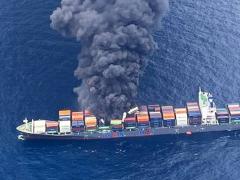
Caption: Shipping lines are between a rock and a hard place ... dock in CT and lose Rotterdam berthing spot ... or skip CT