Road hauliers spell out devastating implications of Itac proposal
The Road Freight Association
(RFA) has raised strong
objection to the singling out
of a single port to be used for
the movement of scrap metal,
according to Gavin Kelly,
technical and operations
manager.
“Scrap metal is not
a national key export
commodity, as is the case with
maize, coal, iron ore or sugar,
for example,” he told FTW.
“For these key
exports – due
to the nature
of both their
volume and
characteristic
– specialised port
infrastructure and
transportation systems were
developed, constructed and
operated by the state. The
existing well-known schemes
– Sishen-Saldanha for iron ore,
RBCT for coal, Buffalo Port
for maize, and DCT and Nico
Malan for containers – are
prime examples of this.”
Kelly also pointed out
that these were dedicated
logistics systems that ensured
maximum utilisation of a
transportation route and a
method for
maximum
return on
investment and
financial gain
for the country.
“However,”
he added,
“this does
not ring
true
in any
manner or
form in the
proposed
singular port
for the export of scrap metal
cargo.
“Secondly, the current
transport logistics is based
on there being a second leg for
the return transport industry.
The road operators move
containers up to the interior
and use the cargo of scrap
metal products to cover/pay
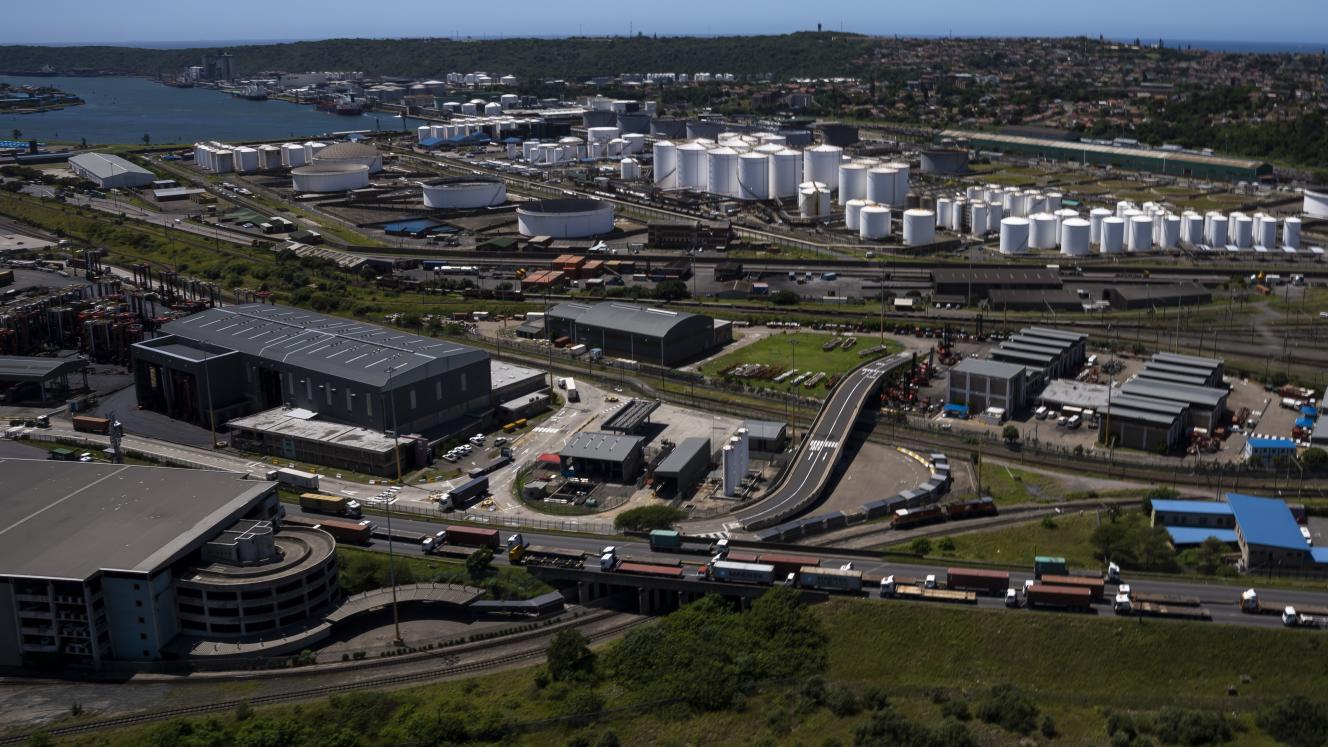
for the return leg to the Port of
Durban.
“Should this leg disappear,
not only will operators need to
find another means to cover
the now “dead” (ie, non-paying)
return leg, but there will be job
losses due to many operators
having to close down due to
non-profitability or inability to
operate.”
A quick assessment
conducted by RFA members
involved in the movement
of scrap metal to Durban
showed costs
becoming
excessive.
“And this,”
said Kelly,
“would force
a price war.”
The long
transport
leg to Port
Elizabeth,
as opposed
to the much
shorter
Gauteng-
Durban leg,
would also have a detrimental
effect. According to Kelly, scrap
metal prices would have to
drop to factor this in. “So,” he
said, “only those close to source
of export (Port Elizabeth)
would benefit. And most scrap
merchants would not be able
to survive and would start
shedding jobs or closing down.”
The RFA study also noted
that it was well known that
the Port Elizabeth rail link
was nowhere as reliable as
the Durban line. “This,” Kelly
said, “will result in missed
stack dates and sailings, and in
demurrage at Coega and depots
like SACD and MSC.
“Also, there is no efficient
timetable on the Port
Elizabeth-Gauteng rail line.
So demurrage will cost the
country far more than any (as
yet unquantified) benefit from
the proposed legislation.”
The association, in its
submission to the International
Trade Administration
Commission (Itac) – the body
which has conceived this
proposal – said that it did
not readily see the rationale
behind the proposal – nor
the financial, job market and
logistics benefits to support
such a proposal.
The RFA also stressed that
the Port of Durban would lose
the income from berthing
and day-to-day costs if this
proposal was put into place.
And this, it added, would make
the cost to move through that
port more expensive again.
“In closing,” said Kelly,
“our ports are currently the
most expensive on the African
continent and we are in danger
of losing more and more cargo
through them. This could tip
the scales even further for
Durban.”
And, the association told
the export control manager
of Itac, it “cannot support any
proposals that will negatively
affect the employment,
reciprocal logistics movement
and financial viability of our
ports – and therefore proposes
that the proclamation of Port
Elizabeth as the sole port for
scrap metal cargo export be
withdrawn”.
INSERT & CAPTION
The current transport
logistics is based on
there being a second
leg for the return
transport industry.
– Gavin Kelly