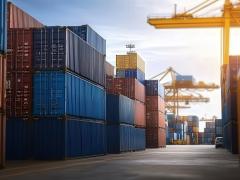
South Africa’s logistics costs – as a percentage of GDP – have dropped to the lowest level ever at 12.7%, according to the results of the 8th Annual State of Logistics Survey released in Johannesburg last week. The joint project by IMPERIAL Logistics, the University of Stellenbosch and the CSIR – titled Gearing up for Change – is one of a handful of studies worldwide that quantifies logistics costs using a modelling approach. “It’s a fantastic achievement,” said Zane Simpson of Stellenbosch University, “and in absolute terms national logistics costs are on a par with 2008, but we would like to drive this down to the region of 10%.” Further good news is that the continuing downward trend in South Africa’s logistics costs is in contrast to recent movements in the USA where this percentage increased from its lowest ratio of 7.7% to 8.3% in 2010. The trend is however in line with BRICS partner Brazil where logistics costs as a percentage of GDP have decreased from 12.1% in 2007 to 10.6% in 2010, says Hans Ittman, who however cautions against blindly comparing logistics costs between countries for benchmarking purposes. Ittman believes tolling in Gauteng will add significant additional costs to logistics operations. “Other potential side effects could worsen the situation with freight vehicles diverting to alternative routes to avoid toll roads, causing even more congestion on these routes,” he said. South Africa’s total logistics costs rose from R323 billion in 2009 to R339 billion in 2010. Transport costs are singled out as the most significant factor impacting the country’s logistics costs, comprising 53.2% of the logistics bill. “If transport is not given priority as a strategic planning imperative, it could become the Achilles heel of economic growth,” said project co-ordinator at the CSIR, Nadia Viljoen. According to research by Stellenbosch University, transport costs showed a drastic increase of 16.2% during 2010 compared to 2009 while inventory carrying costs decreased by 19.9%, attributable to fuel price hikes and greatly reduced interest rates. “A solution to mitigating the risk associated with transport costs is a significant modal shift from road to rail – but consideration should also be given to reducing transport demand.” Clearly huge challenges lie ahead, but South Africans need to recognise that they can be counted among the best in logistics, says chief integration officer at IMPERIAL Logistics, Cobus Rossouw. “South Africa is a leader in complex, emerging and dynamic logistics environments and has achieved success despite geographical impediments, severe skills shortages and lack of economies of scale,” he said. “The South African government’s increased focus on and investment in infrastructure development has seen more than R260 billion being set aside for transport and logistics projects,” said Dr Cornelius Ruiters, executive director of CSIR Built Environment. “The effective maintenance, expansion and management of our country’s infrastructure will enable South Africa to compete at a higher level globally,” he said. The 110-page report contains a wealth of insightful data and comment. It can be downloaded from www.csir.co.za/sol
SA’s logistics costs at lowest ever level
Comments | 0
© Now Media. This content is protected by copyright and may not be adapted or republished. If you would like to discuss cooperation opportunities, please contact: editor@freightnews.co.za.