Major transformation does not
come about overnight
RAY SMUTS
IT REMINDS one rather of the wheels on a huge steam locomotive as they turn almost grudgingly from start-up to reach a rollicking tempo.
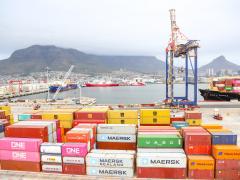
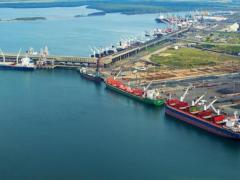
This scenario is most apt to the still-sleepy Cape West Coast town of Saldanha Bay 134km from Cape Town.
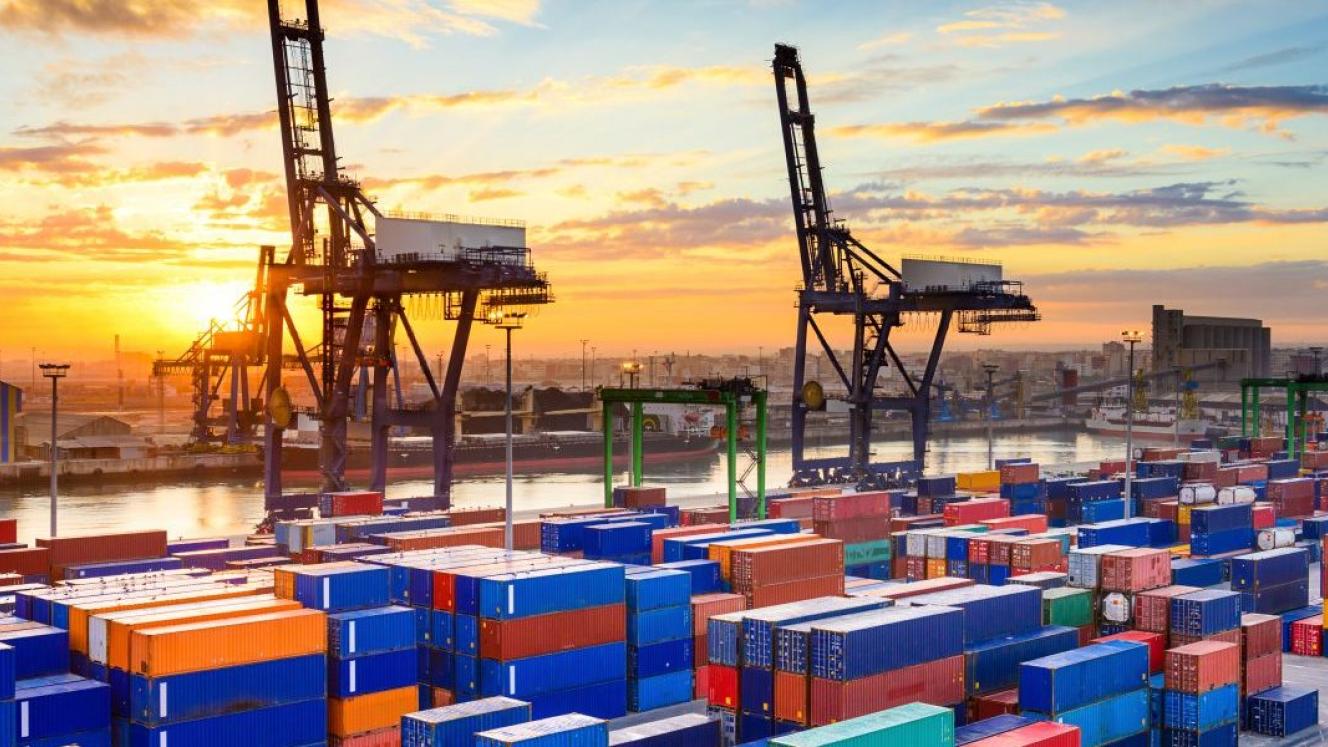
In the 1998/99 financial year 24 million tons of iron-ore were exported from Saldanha while total exports for the same period - steel coils, pig iron, rutile, copper and lead concentrates, chloride, sulphate slag and so forth - increased from 250 505 to 322 934 tons. (Imports for the same period were up by 19 311 tons to 165 920 over the previous year).
Here at Saldanha, like that once-stationary locomotive, the wheels have been set in motion for a massive expansion programme designed to further fuel South Africa's economic muscle by way of vastly increased foreign exchange earnings while at the same time opening up new job and business opportunities for many in this impoverished part of the land.
Of more immediate significance to Saldanha is a R400 million upgrade of the 23-year old iron-ore terminal, now well past its 'sell by' date.
The current equipment only has a design life for handling 18 million tons of iron-ore per annum whereas capacity has been increasing for several years; so much so, that it expects to handle 25 million tons this year.
This upgrade, to be implemented in three stages over a period of three to four years, is aimed at maintaining and increasing plant capacity and Portnet has already embarked on plans to execute the first phase by the end of the month, says project co-ordinator Kgoadi Malatse.
Expansion of
stockpile area
Costing R170 million, this involves the expansion of the stockpile area to increase capacity by one million tons to 3,6 million tons, acquisition of a third stacker reclaimer and a new shiploader and refurbishing the entire conveyor system.
Phase two, costing R105 million, is expected to be commissioned in December 2002 and involves replacing the two existing stacker reclaimers and refurbishing the conveyor structure and shiploader.
Due for commissioning in 2003 is phase three on which a further R125 million will be spent for the acquisition of a second tippler and shunt line. The existing stacker reclaimer is to be replaced, a second sampling plant established and a new conveyor system to thestockpile installed.
Malatse told FTW that the three-phase project would increase capacity to 29 million tons and to 38 million tons by 2010.
Saldanha's port operations manager Basil Ndlovu said the first priority was to retain the existing output and thereafter maintain the existing tariff structure. In that way Transnet would enjoy positive returns as part of the integrated export channel.
Another priority was maintaining reliability of the plant so as to ensure that Portnet's clients ISCOR and Assomang, remained competitive internationally.
We are hoping that a lot will be happening at Saldanha by June and as much of the refurbishment within the port will take place on site, it means job creation, even despite the fairly limited time span of four years.
Aside from the R400 million expansion and refurbishing of the iron ore terminal, Saldanha also stands to gain signifIcantly from Transnet's R1,7 billion, 20-year, expansion programme designed to boost iron-ore exports from 24 to 29 million tons within the first three to four years.
Upgraded rail capacity
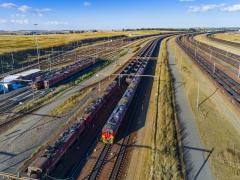
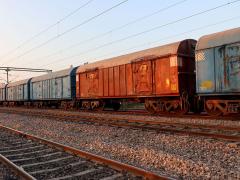
This entails upgraded rail capacity to handle more output from the Iscor and Assomang mines at Sishen and Beeshoek, which are able to guarantee supply for between 30 and 50 years.
Ronnie Kingwill, project manager and general manager for western ports - which includes Saldanha - said the integration of Portnet's iron-ore terminal and Spoornet's Orex line to Sishen would strengthen Transnet capacity and improve its performance.
He explained that this new initiative was being managed as a special project known as Iron Export Channel and would provide a major boost to export activities on the Cape West Coast over the next 20 years.
Copyright Now Media (Pty) Ltd
No article may be reproduced without the written permission of the editor
To respond to this article send your email to joyo@nowmedia.co.za