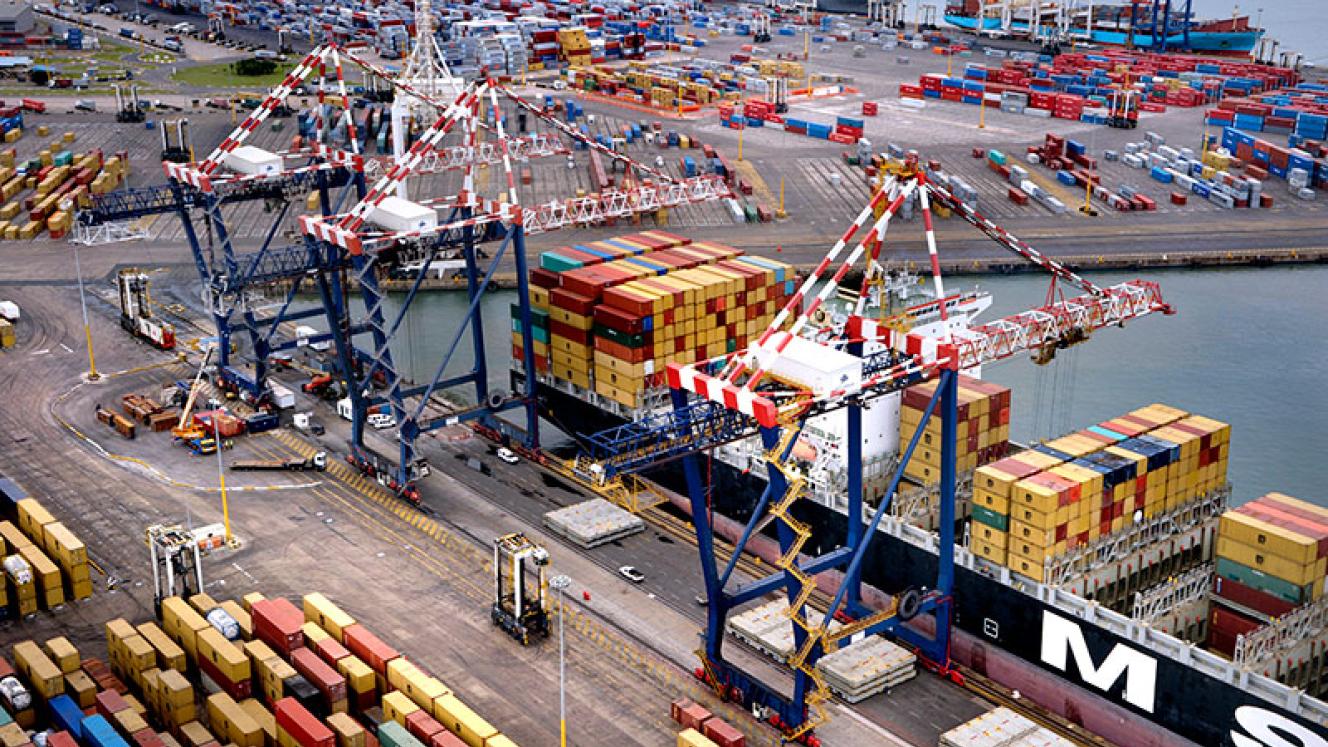
The South African Freight and Logistics Association (SAFLA) and the Road Freight Association (RFA) have proposed a five-point recovery compact to restore predictable cargo flow through Durban Gateway Terminal (DGT).
The associations said sustained disruption was affecting vessel, yard, system and landside operations across the terminal.
According to data cited by SAFLA and the RFA, vessels calling at DGT averaged about 80 hours at anchorage and 106 hours at berth in July. Weekly throughput reportedly declined by 26% following the mid-August Navis N4 cutover, while terminal waiting times reached eight to 12 days.
The associations said independent monitoring data showed that the average Durban port-call time had increased from under five days in late June to more than 12 days by late August. Monthly berth calls had reportedly fallen from 34 to 19 since May.
They added that the time transporters spent in the port precinct per visit had risen by more than half in three months, while transit times on Bayhead Road had increased steadily since January.
SAFLA and the RFA warned that the disruption was affecting businesses beyond the immediate cost of storage and demurrage. They cited production lines waiting for inputs, the use of emergency airfreight at significantly higher costs and trucks standing without bookings.
During the 2023 logistics crisis, the GAIN Group estimated that freight-system dysfunction cost the economy about R1 billion a day in lost output. The associations warned that similar pressures were emerging in Durban.
International Container Terminal Services Inc (ICTSI) assumed operational responsibility for DGT on January 1, 2026, under a 25-year partnership with Transnet. It inherited longstanding infrastructure, yard, road and rail constraints, alongside pre-handover investment in 20 new straddle carriers and four ship-to-shore cranes.
SAFLA and the RFA argued that the focus should now be on whether the equipment was available, reliable and properly synchronised. They said the Navis N4 transition had not created DGT’s constraints but had compounded them.
The associations also argued that accountability should follow the contractual chain, noting that cargo owners contracted with shipping lines, shipping lines contracted with the terminal and Transnet had granted the concession under defined performance commitments.
They said Transnet and the shipping lines were therefore positioned to hold the terminal accountable and should not pass disruption-related costs down a supply chain that had no control over terminal operations.
“Cargo owners and freight forwarders do not experience the port as separate institutions. They experience one chain,” said SAFLA executive officer David Logan.
“If systems, straddles, slots, gates, roads or rail fail to align, cargo stops. The priority is not institutional blame. It is disciplined recovery, with clear owners, deadlines and one trusted set of numbers.”
RFA chief executive Gavin Kelly said transporters were carrying the cost of the disruption on their balance sheets.
“Fleets are standing without bookings while fixed costs run, drivers are queuing on Bayhead Road, and every standing hour ends up in the price of goods. Slot releases must match real capacity, and truck staging must be fast-tracked now. Without trucks, South Africa stops.”
Five-point recovery plan
The associations proposed five measures:
1. One recovery structure – DGT, Transnet entities, eThekwini Municipality, shipping lines, transporters, labour and industry bodies should participate in a single daily structure, with government facilitating rather than managing the process.
2. A public 30-day recovery plan – Daily targets should be published on a single dashboard covering vessel waiting and berth times, crane productivity, equipment availability, system stability, yard utilisation, dwell times, truck turnaround and rail evacuation.
3. Stabilisation of systems, equipment and the yard – Navis Hypercare should remain in place until cargo-flow thresholds are sustained. This should be supported by a straddle-carrier and crane-reliability programme and the accelerated evacuation of long-dwell containers.
4. A coordinated landside plan – Appointment releases should be aligned with actual capacity, with published slot schedules, reasons for cancellations, disclosure of any preferential access and fast-tracked truck staging.
5. Fair commercial treatment – The associations called for the transparent prioritisation of reefers, perishables and critical cargo, as well as published relief processes for storage, demurrage and detention charges arising from delays beyond cargo owners’ control.
SAFLA and the RFA acknowledged DGT’s Hypercare support, storage extensions and Radar platform, as well as the Presidency’s involvement. However, they said a consolidated and independently understandable set of performance indicators was still lacking.
“The Transnet–ICTSI partnership was created to change Durban’s trajectory, and we want it to succeed,” Logan said.
“Success will be measured by predictable berthing, productive ship hours, reliable truck access, effective rail evacuation and cargo arriving on time. Durban needs one recovery plan, one set of trusted numbers and shared accountability. Cargo must move – and it must keep moving.”
SAFLA and the RFA said they were ready to contribute member evidence and industry expertise to a joint recovery task team involving DGT, Transnet, government and other industry bodies.