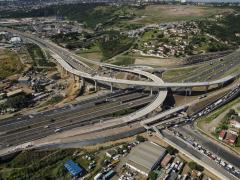
South Africa rates number 52 out of 144 countries in global competitiveness according to the Global Competitiveness Index 2012/13, published by the World Economic Forum (WEF) – a document that has been assessing 12 factors of competitiveness since 2004. Each year the WEF analyses institutions, infrastructure, macroeconomic climate, health and education, higher education and training, efficiency of the commodities market, efficiency of the jobs market, the financial market, availability of technology, size of the market, business sophistication, and innovation of the 144 countries. This has been a relatively stable positioning for this country, having ranked at 50 out of 142 countries in 2011/12 and 54 out of 139 in 2010/11. SA remains the highest-ranked country in sub-Saharan Africa and the third-placed among the Brics (Brazil, Russia, India, China, SA) economies. Said the WEF, SA benefits from the large size of its economy, particularly by regional standards (it ranks 25th in the market size pillar). It also does well on measures of the quality of its institutions and on factor allocation, such as intellectual property protection (20th), property rights (26th), the accountability of its private institutions (2nd), and its goods market efficiency (32nd). Particularly impressive is our financial market development (3rd), indicating high confidence in SA’s financial markets at a time when trust is returning only slowly in many other parts of the world. We also do reasonably well in more complex areas such as business sophistication (38th) and innovation (42nd), benefiting from good scientific research institutions (34th) and strong collaboration between universities and the business sector in innovation (30th). These combined attributes, according to WEF reckoning – and no doubt also of all our readers – make SA the most competitive economy in the region. However, in order to further enhance competitiveness, the country will need to address some weaknesses. We rank 113th in labour market efficiency (a drop of 18 places from last year), with rigid hiring and firing practices (143rd), a lack of flexibility in wage determination by companies (140th), and significant tensions in labour-employer relations (144th) the contributory factors. In addition, SA’s infrastructure, although good by regional standards, requires upgrading (63rd) – which in physical terms may be assisted by the government’s multi-billion infrastructure development programme. The poor security situation remains another important obstacle to doing business in SA. The high business costs of crime and violence (134th) and the sense that the police are unable to provide sufficient protection from crime (90th) do not contribute to an environment that fosters competitiveness. Another major concern remains the health of the workforce, which is ranked 132nd out of 144 economies – the result of high rates of communicable diseases and poor health indicators more generally. At number 52 SA is the best-ranked, but how do we compare to other sub-Saharan African states? There are only six of these states in the index’s Top 100. They are, SA (52) along with some surprises – Rwanda (63), Botswana (79), Namibia (92), Gambia (98) and Gabon (99). Looking at the 15 member states of the Southern African Development Community (SADC) they are ranked: Angola (not rated), Botswana (79), Democratic Republic of the Congo (not rated), Lesotho (137), Malawi (129), Mauritius (54), Mozambique (138), Namibia (92), Seychelles (76), SA (52), Swaziland (135), Tanzania (120), Zambia (102), Zimbabwe (132). Madagascar (130) has its membership currently suspended after the 2010 coup d’état.
SA stable at 52 in global competitiveness index
Comments | 0
© Now Media. This content is protected by copyright and may not be adapted or republished. If you would like to discuss cooperation opportunities, please contact: editor@freightnews.co.za.