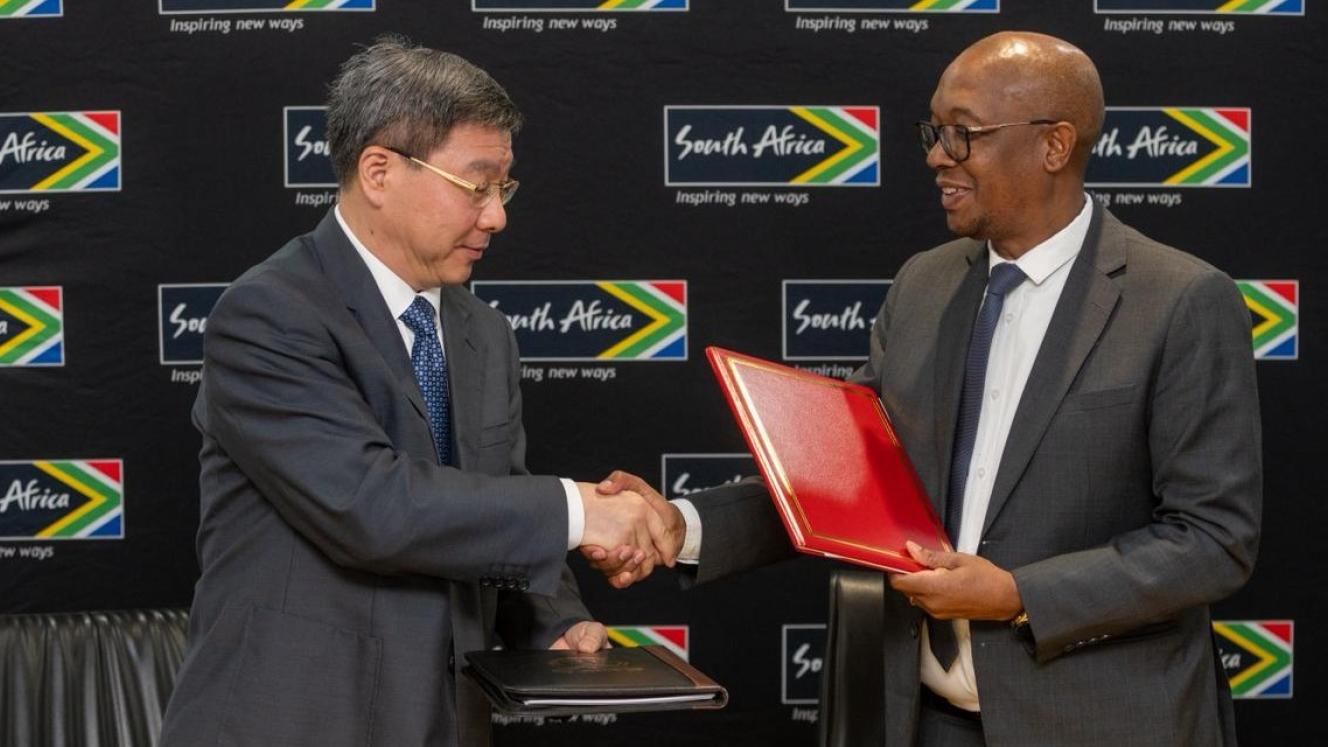
South Africa and China have signed agreements aimed at reducing duplicate testing and certification requirements that continue to delay exports despite the two countries' zero-tariff trade framework, the Department of Trade, Industry and Competition (DTIC) said.
The memoranda of understanding (MoUs) signed between South Africa's National Regulator for Compulsory Specifications, the South African National Accreditation System, and China's State Administration for Market Regulation, are intended to align technical standards and conformity assessment systems between the two countries.
The agreements are expected to address non-tariff barriers, including duplicate product testing, certification requirements and differing compliance processes that can delay shipments even where tariffs have already been removed, according to the DTIC. They also provide for co-operation on standards development, inspection procedures and the mutual recognition of accredited test results.
The MoUs build on the Framework Agreement on the Economic Partnership for Shared Development (CADEPA), under which China granted zero-tariff access to a range of South African exports. While the agreement removed tariff barriers, exporters had continued to face compliance-related administrative hurdles, the department said.
"The practical work programme that flows from today's commitments will focus on priority trade sectors where duplicate testing is creating unnecessary cost and delay," said Parks Tau, Minister of Trade, Industry and Competition.
The framework was expected to streamline export compliance in sectors including automotive, agro-processing, renewable energy technologies, medical devices and new energy vehicles, said the DTIC. Reducing duplication in testing and certification could shorten lead times and lower administrative costs for exporters and logistics operators.
"Through this MoU, we will be establishing a regulator-to-regulator and accreditation-body-to-accreditation-body engagement. We need to establish a practical mechanism through which issues affecting the acceptance of accredited results can be raised, assessed and resolved," Tau said.