South Africa's crackdown on illegal immigration and undocumented employment could have unintended consequences for cross-border freight operators unless government carefully distinguishes between unlawful labour practices and the operational realities of regional transport.
This is the view of cross-border transport specialist and southern Africa vice-president of the African Union of Transport and Logistics Organizations, Mike Fitzmaurice, following President Cyril Ramaphosa's recent national address on migration. Ramaphosa announced a raft of measures aimed at tightening immigration controls and strengthening enforcement against employers hiring undocumented workers.
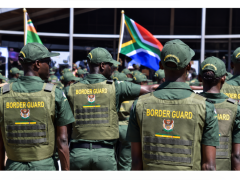
Ramaphosa said government would intensify action against violations of immigration and labour laws, including within the transport sector. "The South African Police Service, Home Affairs and Department of Employment and Labour are increasing inspections, targeting companies employing undocumented foreign nationals," he said.
"To address violations of immigration and labour laws in the transport sector, we are implementing a plan that has been developed with the logistics and freight industry and labour organisations."
Government has proposed a R100 000 fine per worker for employers found to be hiring illegal migrants.
Cross-border realities
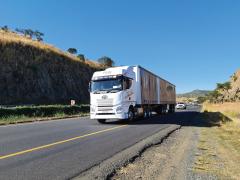
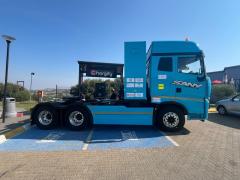
However, Fitzmaurice said public debate around foreign drivers employed by South African operators often failed to take account of the realities of cross-border transport operations, particularly on routes into the Democratic Republic of Congo (DRC).
"What I can say with authority, based on my 20 years involved with cross-border transportation, is that the All Truck Drivers Forum and Allied SA (ATDF-ASA) is grossly misinformed about foreign nationals driving South African-registered trucks," he said.
"There is a valid reason why they are employed by South African cross-border transporters. The majority of cross-border trade in southern Africa is with the DRC, and South African drivers refuse point-blank to drive there."
According to Fitzmaurice, operating conditions in parts of the region are significantly different from those encountered in South Africa.
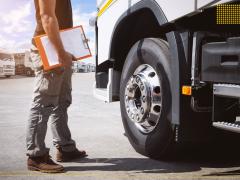
"They are scared to go to the DRC, and they are not prepared to change a tyre when they have a puncture or blowout. They want a service provider to be sent out to do it for them, and that doesn't happen, or if they have a breakdown, they are afraid of being attacked in a foreign country."
He said this left transport operators with few practical alternatives.
"So if they are not prepared to work under those conditions, what choices do cross-border transporters have but to employ foreign nationals to drive in those conditions?"
Foreign drivers on regional routes
Fitzmaurice stressed that many of these drivers were not resident in South Africa.
"It should also be noted that they do not live in South Africa and are only in the country to load and offload cargo on a 14-day visa-free period, which is provided for in the Immigration Act."
He said there was an important distinction between local and cross-border operations.
"I agree wholeheartedly that foreign nationals should not be employed by South African transporters for local work within the borders of South Africa and that those jobs should be reserved for South African drivers. But leave the cross-border transporters out of this. Those foreign drivers don't live in this country."
Fitzmaurice also argued that continental integration frameworks supported the movement of workers across borders.
"The African Continental Free Trade Area is very specific about freedom of movement and employment of African people across borders," he said.
The Road Freight Association had not responded to questions by the time of publication.
Ramaphosa, meanwhile, cautioned against allowing concerns around illegal immigration to fuel hostility towards foreign nationals and warned the public not to take the law into their own hands.
"We must not allow groups to use the legitimate concerns of South Africans to destabilise our country through inciting lawlessness and violence," he said.