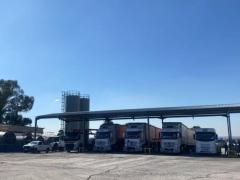
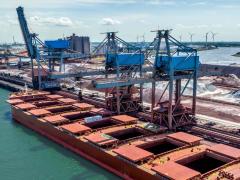
The authorities are not paying sufficient attention to establishing rules and regulations for the safe transport of giant lithium battery arrays being installed in solar and wind farms to provide grid stability, according to Carl Webb, managing director of Project Logistics Management (PLM). In South Africa, lithium- ion batteries are classified as Class 9 hazardous materials under SANS 10228. “Class 9 is a category for hazards that don’t fit neatly into other classes. In this case, lithium batteries pose a combination of chemical and energetic risks rather than flammability or toxicity alone,” according to an Arrive Alive advisory on the transport of the batteries. “Being Class 9 means that any significant shipment of lithium- ion batteries (for example, bulk batteries or batteries not installed in equipment) must adhere to strict transport requirements, including the use of appropriate labels, documentation and packaging. “It is a very big problem area,” Webb told Freight News. “We are getting orders to move 400 containers of lithium batteries weighing between 35 and 43 tons each, to different parts of the country. “The problem there is that none of the abnormal registered vehicles which can carry that weight are hazardous registered.” The registration challenge is that the NaTIS system does not allow a vehicle or trailer to be registered as both abnormal and hazardous, he says. This has implications for insurance claims, in addition to non-compliance with road regulations. “There will be very big problems if something goes wrong. “Nobody seems to realise that. The port is quite happily loading these containers onto trucks and trailers that, firstly, are not registered, and secondly, are not built for the load. “We had a 43-ton battery the other day loaded on a 30-ton trailer “Trucks are going in without twist locks. They are getting loaded, with the battery just chained down.” The batteries also pose a hazard where they are being stored in transit, as well as at their final destination. “What the authorities and hauliers do not realise is that if a lithium battery comes off and ignites, there is no way of putting out the battery fire. “They do not realise the extent of the disaster that’s going to happen, and it will happen.” Webb says project cargo operators and the Road Freight Association have been trying to address the risks with NaTIS for two years, without success. “So, we’re going to carry on with the situation until something happens, and when it happens, it is going to be a big disaster.” Webb is also concerned about the quality of the mainly Chinese vessels transporting the batteries to South Africa. “At any one time you will have four or five Chinese vessels discharging in the harbour (Durban). “The exporters use the cheapest possible boat that they can find.” The vessels’ cranes often do not work, and offloading is haphazard, he adds. ER
Risks of transporting giant lithium batteries underestimated
Comments | 0
© Now Media. This content is protected by copyright and may not be adapted or republished. If you would like to discuss cooperation opportunities, please contact: editor@freightnews.co.za.