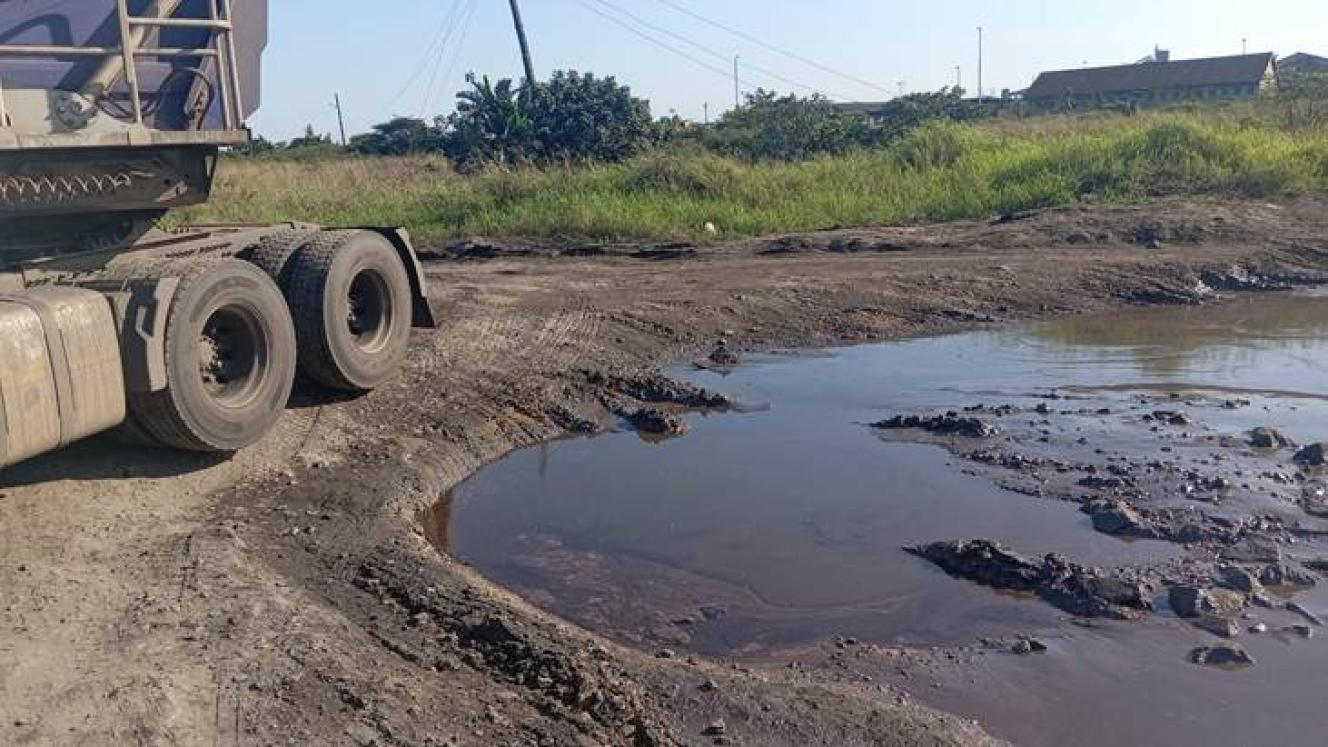
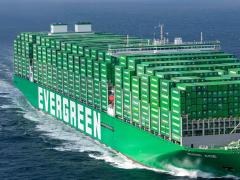
In a “reality check” given to FTW, the Road Freight Association (RFA) has responded to a report by the Citrus Growers’ Association of Southern Africa (CGASA) that recommended “lowdeck” skeletal trailers as a means to transport highcube containers and stay within the Department of Transportation’s height restrictions. “Unfortunately, these types of studies once placed into a public forum – and this is not personal – have to be countered with logical and cost effective alternatives,” said Gavin Kelly, technical and operations manager for the Road Freight Association. The RFA has been calling on the DoT to concede to ISO containers the maximum height concession allowed for double-decker buses. “The argument submitted by the DoT that high cube containers (per se) are unstable has been shown to be false,” said Kelly. But what of the recommendation of the CGASA report, “Research on Regulatory Aspects of (Citrus) Reefer Container Transport” by Shane Rademeyer of IMG Agencies and Mitchell Brooke, logistics development manager at CGASA, that the answer to DoT height restrictions can be found in the use of low-deck skeletal trailers? “The bottom-line is the true costs of these types of changes are always overly simplified, while real examples of how to bring down costs are ignored,” said Kelly. “The changing of the travel height on high cubes to 4.3m by 2019 using trailer design is certainly possible. The question is, is it desirable? You have to consider the cost to convert all existing warehouse ramps and cold store seals in order to accommodate the nonstandard height to a lower height,” he noted. Rather than make the road f leet more versatile because low-deck skeletal trailers can be converted to accommodate regular containers, the RFA argues the opposite would occur. “The lack of f lexibility on existing f leets in the future will impact on your seasonal trade – as the nation will not go for the lower height and greatly increased cost across the logistic chain. Skeletal trailers are used less than 1-2% on the long distance trade and removable decks are a non- starter because Sods Law will find that when a transporter needs the deck it will be lying at the receiving point and not at the loading point,” Kelly said. “We use a king-pin setting of 700mm and on testing we found that the load was so well spread between axle groups a very experienced driver insisted he had only 26 tons on his back when he had 31 tons – due to gear selection to climb a hill and visual tyre loadings! The debate about how to continue using high cube containers after 31 December 2018 when the DoT moratorium on the new height limits expires is wrongly focused, the RFA believes. In terms of safety, high-cubes pose no risk and it is the need for height restrictions that should be scrutinised. “The RFA has an engineered drawing that shows that the present travel height of 4.5-4.6m does not constitute an increased risk. We have been moving these containers at this height for in excess of 15-20 years. Furthermore, the TRH 11 Guideline to Abnormal Transport has a recommendation of axle width of X 2 = approximately 4.9 height as being as safe from overturning. According to the engineered drawing, a travel height of 4.6m does not make (the trailer and container) unstable,” Kelly said. At the end of the day, the RFA wants DoT vehicle height limits reconsidered on the weight of new evidence. “A double-decker bus is legal (on SA roads) at 4.6m, and this carries people. All that is required is for the law to make the same special exemption for ISO containers: 4.6 m,” Kelly said. INSERT & CAPTION The bottom-line is the true costs of these types of changes are always overly simplified – Gavin Kelly CAPTION If a double-decker bus is legal on SA roads then the same special exemption should be made for ISO containers.
RFA weighs in on high cube `solution´
Comments | 0
© Now Media. This content is protected by copyright and may not be adapted or republished. If you would like to discuss cooperation opportunities, please contact: editor@freightnews.co.za.