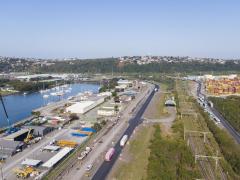
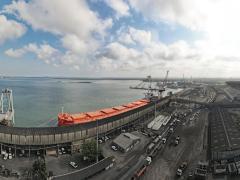
TERRY HUTSON OPENING WHAT she described as the world’s most modern and up-to-date wood chipping terminal in Durban recently, Transnet CE Maria Ramos said the plant would generate immediate earnings of R150 million a year. She said the difference between developing and developed countries often lay in the existence of infrastructure. Durban Wood Chips was the second new world class terminal to open on Maydon Wharf this year and showed Transnet’s response to market requirements by providing this infrastructure. “Our economy needs more of these facilities,” she added. Dr Carl Seele, chairman of NCT Forestry Co-operative, said the Durban plant brought the advantages of the lucrative Japanese chip market to the very doorstep of the co-operative’s members in central and southern KZN. “We needed to counteract the ever-increasing rail and road freight costs to Richards Bay, and to give effect to NCT’s strategy of not relying on a single chip export channel into Japan.” As a result a long-term contract was agreed with a core Japanese customer to provide 300 000 tonnes a year of hardwood eucalyptus wood chips to the Japanese paper industry. The new plant has capacity for 360 000 tonnes per annum and is the country’s fourth wood chip export facility – there are another three at Richards Bay. It is also the first in the country that met all environmental criteria even before construction of the plant had begun. At all stages Durban Wood Chips has adhered to these environmental limitations as set out in the Environmental Impact Assessment. The establishment of the wood chip facility was facilitated by co-operation between NCT and Agriport, which owns the grain elevator and gallery in front of the wood chip plant. Agriport provided a new shiploader and built sleek new galleries along which the conveyor system reaches the shipside. The galleries will double for both wood chips and grain products.
Ramos opens world’s most modern wood chip plant
Comments | 0
© Now Media. This content is protected by copyright and may not be adapted or republished. If you would like to discuss cooperation opportunities, please contact: editor@freightnews.co.za.